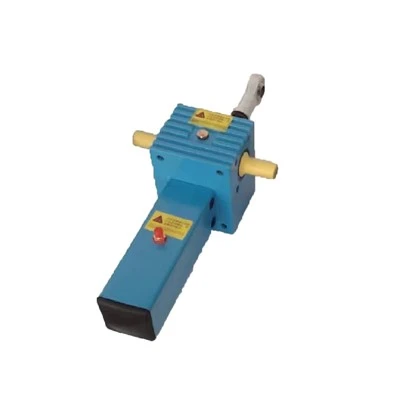
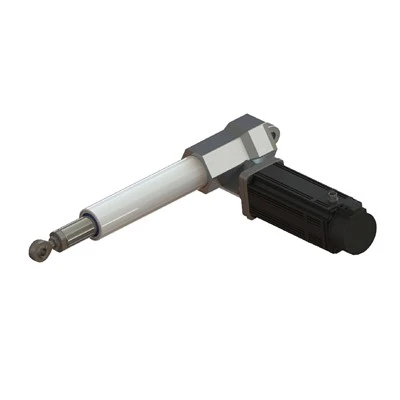
A Linear Servo Electric Cylinder converts the rotary motion of a motor into controlled linear movement. Its flexible control capabilities, convenient integration, and suitability for automated operation make it useful across a wide range of industries. As industrial production increasingly demands automation, precise positioning, and process control, these actuators have become valuable components in many applications. Different industries have different requirements for motion, load conditions, and operating cycles, so the actuator and control system should be selected according to the specific process.
In industrial automation lines, Linear Servo Electric Cylinders are commonly used for workpiece pushing, positioning, clamping, lifting, and station transfer. For example, in an automated assembly line, the actuator can move a workpiece to a designated position according to a preset sequence and coordinate with subsequent operations. By controlling position and speed, it helps maintain synchronized production activities, reduce manual intervention, and improve the consistency of repetitive tasks.
The automotive manufacturing industry is another important application area. Linear Servo Electric Cylinders can perform pushing, pressing, and positioning operations in automotive component assembly, workpiece positioning, press-fitting processes, and production support equipment. When integrated with other automated equipment on the production line, they help carry out repetitive operations and adjust movement according to process requirements. For applications involving heavy loads or special safety requirements, the operating conditions must be carefully evaluated, and appropriate protective and control measures must be implemented.

In electronics manufacturing and precision assembly, equipment often needs to perform accurate positioning and repeatable movements. Linear Servo Electric Cylinders can be used for component assembly, workpiece transfer, fixture positioning, and motion control in automated inspection equipment. By appropriately controlling movement speed, stroke, and stopping position, they can help reduce unnecessary mechanical impact and improve assembly consistency. However, actual positioning accuracy and repeatability also depend on the mechanical structure, control system, installation method, and external load.
The machining industry also uses Linear Servo Electric Cylinders for workpiece feeding, fixture movement, tool positioning, and auxiliary pushing operations. In automated machining equipment, these actuators can work with sensors, controllers, and other motion components to coordinate operations between different processing stages. In environments involving cutting fluids, metal chips, or substantial vibration, particular attention should be paid to equipment protection and installation conditions.
In packaging and logistics, Linear Servo Electric Cylinders can support product pushing, packaging positioning, sorting assistance, conveyor stopping, and material transfer. By executing movements according to control commands, they can coordinate with conveyors, detection devices, and other automated equipment to reduce manual handling and repetitive work. In systems requiring frequent changes to operating sequences or coordination among multiple stations, servo-driven control offers greater flexibility.
Linear Servo Electric Cylinders can also be used in food processing equipment, pharmaceutical machinery, laboratory automation systems, and certain new-energy manufacturing processes. In these industries, factors such as cleanliness, ambient temperature, humidity, dust, and applicable safety requirements must be considered alongside motion control. Suitability should be assessed according to the actual operating environment and the product design.
Overall, Linear Servo Electric Cylinders are suitable for industrial applications requiring controlled linear motion. They are particularly useful in automated assembly, precision positioning, material handling, and repetitive mechanical operations. When properly selected and integrated with the control system, they can help improve production workflows and the level of automation.