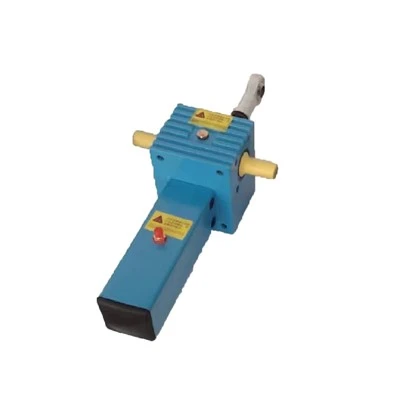
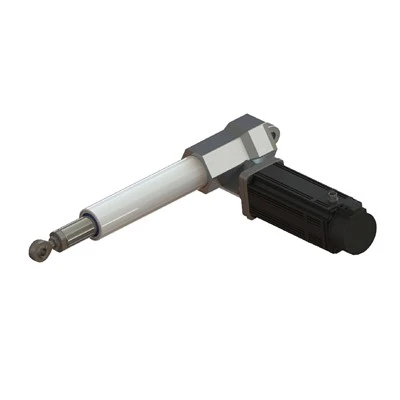
Linear Servo Electric Cylinders and conventional pneumatic cylinders are both widely used linear actuators in industrial automation. They can perform pushing, pulling, positioning, and clamping operations. However, they differ significantly in their power sources, motion control methods, system components, operating characteristics, and suitable applications. The choice between them should be based on process requirements, positioning accuracy, load conditions, operating frequency, and the available supporting systems.
In terms of drive mechanism, a Linear Servo Electric Cylinder typically uses a servo motor to generate power and converts the motor's rotary motion into linear movement through a ball screw, roller screw, or another mechanical transmission structure. The electrical control system receives motion commands and adjusts the actuator according to the required parameters. A conventional pneumatic cylinder, by contrast, relies primarily on compressed air supplied to the cylinder to drive the piston and piston rod outward or inward. Its operation is generally controlled through an air supply, directional control valves, and associated pneumatic components.
In terms of position control, a Linear Servo Electric Cylinder is generally better suited to applications requiring continuous position adjustment and repeatable positioning. When equipped with appropriate feedback devices, the control system can obtain the actual position and adjust the servo motor to move the rod toward the target position. Conventional pneumatic cylinders can also use external sensors, pneumatic control components, and auxiliary mechanisms for position detection and a certain degree of positioning. However, traditional pneumatic systems generally require more complex arrangements to achieve flexible, continuous position control.
In terms of motion adjustment, a Linear Servo Electric Cylinder can adjust speed, acceleration, stroke, and stopping position through its control system. This flexibility is valuable in equipment that needs to approach workpieces slowly, move in multiple stages, or execute different operations according to specific process requirements. Conventional pneumatic cylinders are more commonly used for straightforward movements, such as extension and retraction. Their speed and motion behavior are typically managed through airflow regulation, valve control, and cushioning mechanisms. Although pneumatic systems can support various control functions, they are generally less flexible when complex motion profiles and continuous position control are required.
The two systems also differ in their supporting components. A Linear Servo Electric Cylinder generally requires a servo drive, controller, power supply, and appropriate feedback devices. A conventional pneumatic cylinder typically requires a compressed-air supply, pneumatic tubing, valves, and associated control components. The electric system relies on coordination between electrical control and mechanical transmission, while the pneumatic system depends on a stable air supply and properly functioning pneumatic components. Existing factory infrastructure can therefore influence the choice.
Energy consumption and maintenance should also be considered. Neither system is automatically more energy-efficient or easier to maintain in every application. The energy consumption of a Linear Servo Electric Cylinder depends on the load, operating cycle, control strategy, and motor efficiency. A pneumatic system's energy use depends partly on the generation and distribution of compressed air and the associated energy losses. Maintenance for an electric actuator focuses on mechanical transmission components, lubrication, and electrical systems, while pneumatic cylinder maintenance involves seals, air quality, tubing connections, and valve condition.
Overall, Linear Servo Electric Cylinders and conventional pneumatic cylinders each have their own advantages. Electric servo cylinders offer flexible motion control, while pneumatic cylinders remain practical for applications that benefit from simple structures and established pneumatic technology. Selection should be based on the actual process and system requirements rather than on the drive method alone.