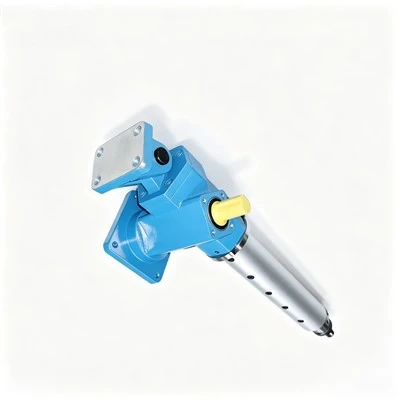
Products Description
An Industrial Electric Actuator is a driving device that converts electrical energy into mechanical motion to achieve automatic control of valves and other industrial equipment. It is widely used in industrial automation control systems. The product operates through an electric motor and an internal transmission mechanism, transferring power to the output components to perform valve opening, closing, or regulating actions. By receiving commands from a control system, the Industrial Electric Actuator enables remote operation, automatic control, and adjustment of equipment operating conditions, reducing manual intervention while improving operational stability and control efficiency. It features convenient operation, smooth performance, and flexible control, making it suitable for integration with various types of industrial equipment and meeting the automation requirements of different industrial applications.
Application Areas
Petrochemical Industry
Used for valve control in petroleum processing and chemical production systems, helping automate fluid transportation and production processes.
Water Treatment Industry
Applied in water supply, wastewater treatment, and water circulation systems to control related valves and meet the operating requirements of different treatment processes.


Power Industry
Used in power generation and auxiliary systems to control equipment and coordinate valve operation with automated control systems.
Metallurgical Industry
Suitable for automated control in steelmaking, metal processing, and related production lines, helping improve equipment operation and production management.
Product Advantages
Automatic Control
Receives commands from control systems to achieve automatic operation, reducing the need for manual intervention and improving the level of industrial automation.
Stable Operation
The coordinated operation of the electric motor and transmission mechanism ensures smooth actuator movement and helps maintain stable equipment performance.
Easy Operation
Supports remote control and on-site operation, allowing operators to conveniently adjust equipment operating conditions according to production requirements.
Precise Control
Executes corresponding actions according to control instructions, meeting industrial equipment requirements for positioning and operational adjustment.
Wide Applications
Can be integrated with various industrial valves and automation equipment, making it suitable for different production processes and industrial control applications.
Improved Efficiency
Uses an electric drive system to reduce the operational workload associated with certain traditional manual or alternative drive methods, improving equipment management efficiency.
Operating Instructions
Proper Installation
Select a suitable installation location according to the product requirements. Ensure that the actuator is securely connected to the valve or associated equipment to prevent installation misalignment from affecting normal operation.
Correct Wiring
Connect the power supply and control cables according to the product wiring instructions. Check all connections carefully to ensure electrical safety and reliability.
Commissioning and Testing
Before putting the equipment into operation, inspect the installation and control conditions. Carry out the necessary commissioning procedures to confirm that the actuator functions properly.

FAQ
Q: What is the main purpose of an Industrial Electric Actuator?
A: An Industrial Electric Actuator is primarily used to drive valves and other industrial equipment, enabling opening, closing, and regulating operations. By receiving commands from a control system, it can perform remote operations and automated functions. It is widely used in industries such as petrochemicals, water treatment, power generation, metallurgy, and HVAC.
Q: What is the difference between an Industrial Electric Actuator and a pneumatic actuator?
A: An Industrial Electric Actuator uses an electric motor to generate mechanical movement, while a pneumatic actuator relies on compressed air as its power source. The two types differ in their power sources, control methods, supporting facilities, and application environments. Users should select the appropriate type according to actual site conditions and control requirements.
Q: What should be done if an Industrial Electric Actuator operates abnormally?
A: If an Industrial Electric Actuator experiences abnormal movement, unstable operation, or control failure, the relevant operation should be stopped promptly. Check the power supply, control signals, wiring connections, and mechanical transmission components to identify the cause.
Factory Environment


Hot Tags: industrial electric actuator, China industrial electric actuator manufacturers, suppliers, factory, actuators, compact linear actuator, electric screw cylinder, high speed linear actuator, integrated linear actuator, linear actuator fast speed