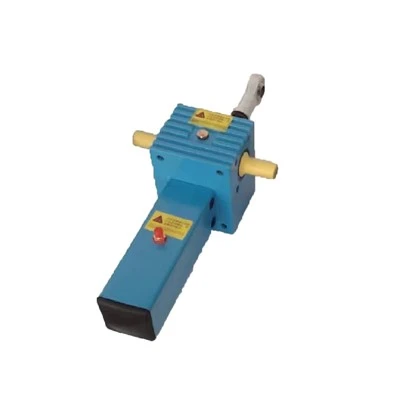
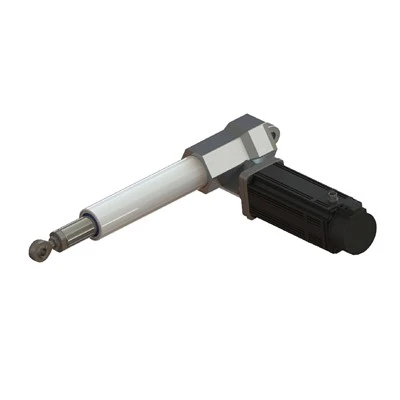
Industrial Electric Actuators and hydraulic push rods are both commonly used linear motion devices. They are primarily designed for pushing, pulling, lifting, and positioning operations. Although their final movement forms are similar, they differ significantly in power sources, internal structures, working principles, and practical applications. Understanding these differences helps users select an appropriate drive solution according to their equipment requirements.
First, their power sources are different. Industrial Electric Actuators primarily use electrical energy to drive an electric motor. The motor generates rotational power, which is transmitted through internal reduction and mechanical transmission mechanisms to convert rotational movement into linear motion. Hydraulic push rods, on the other hand, rely on a hydraulic system. A hydraulic pump converts mechanical energy into hydraulic energy, allowing pressurized fluid to enter a hydraulic cylinder and push the piston to produce linear displacement.
Second, their internal structures are different. Industrial Electric Actuators generally consist of an electric motor, reduction mechanism, screw transmission mechanism, actuator rod, and related control components. Their overall structure is relatively integrated. Hydraulic push rods usually operate together with hydraulic cylinders, hydraulic pumps, oil tanks, control valves, pipelines, and other hydraulic components. For equipment that requires an independent hydraulic power source, the overall system configuration is relatively complex and requires careful consideration of hydraulic power and pipeline layout.

Their control methods also differ. Industrial Electric Actuators mainly control extension and retraction by regulating the motor's starting, stopping, and rotation direction. Some models can also be equipped with position feedback devices to provide more flexible motion control. Hydraulic push rods use control valves to regulate the direction, pressure, and flow of hydraulic fluid, thereby controlling the movement direction and operating conditions of the actuator. Both systems can be integrated into automated control systems, but their specific control methods and configurations are different.
In terms of installation and space requirements, Industrial Electric Actuators generally integrate the motor and transmission mechanism into a single assembly. Installation mainly involves connecting the actuator to the external mechanical structure. Hydraulic systems, however, require consideration of the positions of the hydraulic pump station, oil tank, pipelines, control valves, and other components. Therefore, more space may be required for the overall equipment layout.
Maintenance requirements are also different. Industrial Electric Actuators mainly require inspection of the motor, internal transmission components, lubrication conditions, actuator rod surface, and electrical connections. Hydraulic systems require additional attention to hydraulic fluid condition, pipelines, seals, hydraulic pumps, and control valves. Problems such as fluid leakage, contamination, or seal failure may affect the normal operation of a hydraulic system.
In terms of applications, Industrial Electric Actuators are suitable for mechanical equipment requiring electric drive, linear motion control, and automated positioning. Typical applications include automated production lines, packaging machinery, lifting equipment, and warehousing systems. Hydraulic push rods are commonly used in hydraulic-powered construction machinery, heavy-duty equipment, and certain industrial machines that require hydraulic driving force.
There are also differences in operating environments and maintenance management. Electric actuators require attention to electrical safety, heat dissipation, and transmission lubrication. Hydraulic push rods require careful management of hydraulic fluid cleanliness, system sealing, and pipeline conditions.
Overall, Industrial Electric Actuators and hydraulic push rods each have their own advantages and application characteristics. Neither is universally superior in every situation. Users should make a comprehensive decision based on the equipment's drive method, working load, installation space, control requirements, and maintenance conditions. Industrial Electric Actuators are particularly suitable for applications requiring electric control and relatively compact linear motion systems, while hydraulic push rods may be more appropriate for equipment that already uses hydraulic power.