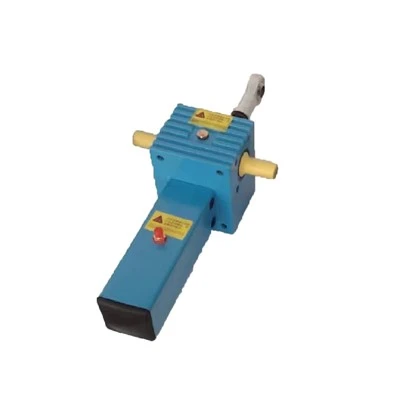
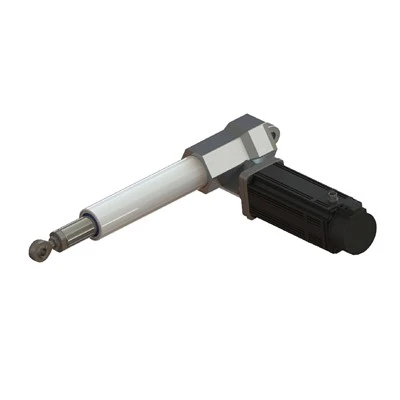
The smoothness of an Industrial Electric Actuator during operation directly affects equipment efficiency, operating performance, and the service condition of internal components. In automated production lines, lifting equipment, and machining systems, noticeable vibration, sticking, or uneven movement during extension and retraction may interfere with the normal operation of the entire mechanical system. Therefore, maintaining smooth movement requires attention to installation, load conditions, transmission mechanisms, control methods, and routine maintenance.
First, proper installation is essential for smooth operation. Industrial Electric Actuators are generally connected to external equipment through mounting brackets, connecting pins, or other fastening structures. If the installation position is incorrect or the connection points are misaligned, the actuator may experience additional lateral forces during extension and retraction. Such forces increase the workload on internal guiding structures and transmission components, potentially causing irregular movement. Therefore, the actuator should be installed with properly aligned connection points to ensure that it moves along the intended path.
Second, external loads should be distributed evenly. Industrial Electric Actuators mainly provide axial pushing and pulling force. If the external mechanical structure has uneven loading, an offset center of gravity, or excessive movement resistance, the actuator may experience additional or uneven forces. For example, if a lifting platform is not evenly loaded on both sides, the actuator may be subjected to unnecessary lateral stress during operation. Therefore, the external mechanical structure should be inspected to ensure balanced load distribution and avoid unnecessary stress on the actuator.
Third, the internal transmission mechanism should be properly lubricated. Industrial Electric Actuators generally rely on screws, nuts, and other transmission components to achieve linear movement. These components generate friction during operation. Insufficient lubrication may increase movement resistance and cause vibration, irregular speed, or abnormal noise. Regular lubrication according to the product's operating requirements helps reduce unnecessary friction and maintain smooth transmission.
The motor control method also affects motion stability. In automated equipment that requires frequent starting and stopping, improper control may cause sudden starts, abrupt stops, or mechanical impacts. By arranging the control sequence properly and coordinating the motor's starting, running, and stopping processes, mechanical shock can be reduced. For applications requiring more precise positioning, suitable control devices can also be incorporated to achieve smoother movement.
In addition, the operating condition of guiding structures and connecting components should be monitored. Guiding components help restrict the actuator rod's movement direction and prevent unnecessary deviation. If these components become worn, loose, or affected by foreign objects, the actuator may operate unstably. During routine inspections, users should check whether the actuator extends and retracts smoothly, whether connections remain secure, and whether the guiding structure shows signs of abnormal wear or damage.
The working environment can also affect motion performance. In dusty industrial environments, contaminants may accumulate on the actuator rod surface and increase friction during movement. Long-term exposure to moisture or corrosive substances may also affect the condition of certain metal components. Therefore, appropriate protective measures should be adopted according to the actual working environment, and the actuator rod surface and surrounding equipment should be cleaned regularly.
Finally, attention should be paid to abnormal operating conditions. If noticeable vibration, sticking, unusual noise, or uneven extension and retraction speed occurs, the actuator should be stopped and inspected promptly. Possible causes may include installation misalignment, uneven loading, insufficient lubrication, or abnormal transmission components. Continuing to operate the equipment under abnormal conditions should be avoided.
In conclusion, the motion stability of Industrial Electric Actuators is closely related to installation accuracy, load conditions, transmission lubrication, motor control, and routine maintenance. Proper coordination of these factors helps reduce unnecessary mechanical vibration and movement resistance, allowing Industrial Electric Actuators to operate smoothly and reliably while meeting the requirements of industrial equipment.