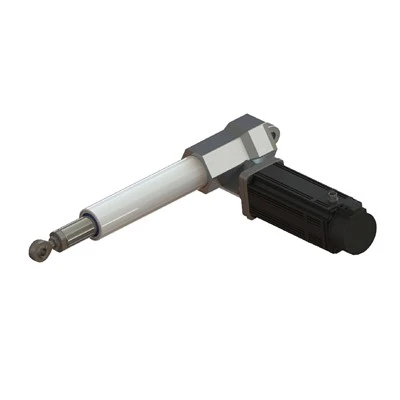
When selecting an Electric Linear Actuator, many users pay close attention to operating noise as a practical performance factor. After all, when equipment runs on‑site for extended periods, noise levels directly shape the overall working environment and affect on‑site personnel's experience, making noise output a noteworthy point for real‑world application. Many people confuse Electric Linear Actuators with other high‑power industrial equipment and subjectively assume all motor‑driven machinery must produce loud operating noise. This assumption is incorrect. The core function of an Electric Linear Actuator is to perform opening, closing and adjustment motions for valves or associated mechanisms. It is not a high‑speed continuously rotating device. Most units operate intermittently: sound is generated only while motions are executing, and the unit enters a static state once motions finish, so it does not produce constant noise.
Operating noise stems from several primary sources: baseline hum from the internal motor, mechanical noise from gear meshing, and faint friction noise as components shift during actuation. Targeted optimizations for these noise sources are implemented at the product design phase. Transmission parts are machined to tight tolerances, and component fit clearances are precisely controlled to reduce impact during gear meshing and lower noise caused by mechanical friction. Integrated buffer structures further dampen operational vibration. Since vibration is a major noise catalyst, outward‑radiated noise is significantly reduced once vibration is suppressed.
In standard working scenarios, sounds generated during opening and closing are soft and free of harsh roaring, and do not create disruptive noise. Industrial sites often host multiple pieces of running equipment, creating inherent background noise. Sound emitted by the Electric Linear Actuator during actuation is frequently masked by noise from other machinery. Personnel standing near the unit will not experience noticeable acoustic disturbance. Objectively, perceived noise varies across operating environments. Within a quiet enclosed space with no other active equipment, actuation‑related sound becomes more perceptible, yet it still does not qualify as high‑intensity harsh noise.
Where on‑site conditions encourage resonance - for example, mounting bases with insufficient rigidity - minor vibration from equipment motion transfers to connected pipelines and brackets and triggers resonance in adjacent structures. In such cases, audible noise does not originate entirely from the Electric Linear Actuator itself; most of the sound is amplified by resonance of surrounding components. This effect arises from site‑specific environmental conditions rather than inherent product defects. First‑time users frequently misinterpret this amplified noise as excessive unit noise. Improving mounting conditions on‑site can mitigate such amplified acoustic output.
Another common scenario occurs after prolonged field operation: heavy on‑site dust allows contaminants to infiltrate transmission assemblies and raise operating noise. This change stems from external contaminants, not factory‑originated defects. Maintaining a reasonably clean operating environment preserves favorable long‑term noise performance. Overall, this Electric Linear Actuator satisfies noise‑related requirements for most general‑purpose industrial scenarios and will not create on‑site operational disruptions due to operating noise. Users need not overemphasize noise‑related concerns. During solution evaluation, avoid benchmarking Electric Linear Actuator noise performance against high‑speed rotating machinery, as their operating principles are fundamentally different. Evaluating perceived sound against actual site conditions yields more objective conclusions.