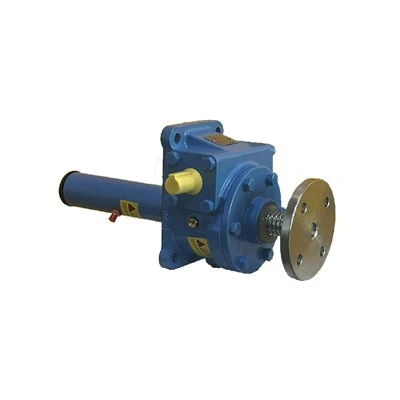
In numerous projects, equipment cannot be commissioned immediately upon delivery. Due to practical variables including construction timelines, on‑site layout revisions and project schedule delays, Electric Linear Actuators may be placed in storage for periods ranging from several weeks to multiple months. Whether units restart reliably after idling represents a practical concern for many operators. Equipment does not require immediate power‑on after delivery. Appropriate idle storage will not render hardware inoperable. That said, post‑idling performance heavily depends on storage conditions, which determine whether shelved units can function reliably upon restart.
If storage spaces are dry and well‑ventilated with minimal dust accumulation, protected from rain, moisture intrusion and corrosive agents, and basic protective measures are applied, shelved Electric Linear Actuators will typically complete motions successfully upon re‑activation with no startup failures. Internal components undergo negligible degradation under static storage. Without continuous mechanical loading and rotation, parts experience no abrasive wear. Internal hardware status remains sound as long as external environments do not cause corrosion.
Nevertheless, real‑world storage locations seldom match ideal specifications. If equipment sits outdoors without shelter, cyclic temperature swings allow ambient moisture to seep into internal cavities. Moisture buildup inside gradually degrades internal electronic assemblies and causes operational anomalies when power is restored after extended storage. High‑dust storage environments permit fine particulate matter to penetrate gaps and accumulate between component interfaces, obstructing mechanical movement at restart.
Another frequent scenario occurs when equipment is stacked directly on construction sites exposed to corrosive vapors or splattered contaminants. These external agents continuously degrade casings and connection interfaces and create latent risks for subsequent startup malfunctions. Such issues stem from harsh storage surroundings rather than inherent product quality flaws. The exact same Electric Linear Actuator will deliver vastly different restart outcomes when stored in a controlled warehouse versus exposed open‑air construction‑site stacking.
Idle duration also exerts measurable influence. Proper storage spanning several months imposes very limited adverse effects. If equipment remains completely static for multiple years, even under favorable ambient conditions, certain internal components will undergo natural performance degradation from prolonged disuse. This material aging effect is an objective characteristic shared by all industrial products.
When preparing to reuse equipment after idling, full‑load operation immediately after power‑on is not recommended. Inspect external surfaces for visible anomalies including dampness, excessive dust and casing damage. Perform no‑load motion tests first to verify smooth opening‑closing cycles. Confirm normal motion sequences before connecting the unit to live working conditions. These straightforward precautions mitigate potential risks introduced by idle storage.
To conclude, Electric Linear Actuators support re‑commissioning following idle periods, yet this capability is conditional on adequate storage environments. Operators should prioritize proper storage protocols rather than assuming unused equipment remains fault‑free. Sufficient protection during storage substantially improves post‑idling restart success rates and reduces avoidable issues in later‑stage deployment, fully unlocking the product's functional value.