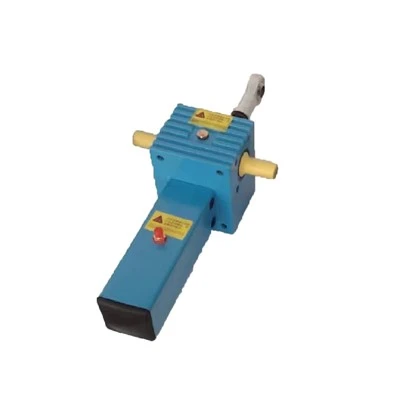
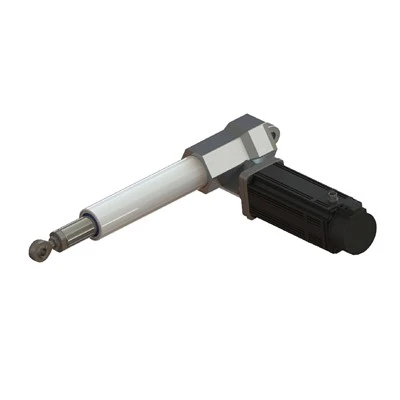
Industrial Electric Actuators are widely used linear motion devices that offer several advantages over certain conventional mechanical drive methods in terms of automation, installation, and daily operation. As industrial equipment increasingly requires higher levels of automation, operational efficiency, and convenience, Industrial Electric Actuators are becoming more widely adopted in different mechanical systems. Their main advantages can be explained as follows.
Convenient Operation and Flexible Control
Industrial Electric Actuators use electric motors to achieve extension and retraction, reducing the need for manual mechanical adjustments. Operators can send commands through control switches or automated control systems, allowing the actuator to perform the required movements. This operating method is straightforward and convenient, helping reduce manual operations and improve equipment usability.
High Level of Automation
Industrial Electric Actuators can work with control systems, electrical equipment, and other actuators to perform automatic starting, stopping, reciprocating movements, and positioning operations. On automated production lines, the actuator can be controlled according to different production processes, allowing equipment to operate in a predetermined sequence. This helps improve production continuity and reduce manual intervention.
Compact Structure and Convenient Installation
Industrial Electric Actuators generally adopt integrated or modular designs, combining the motor, transmission mechanism, and actuator rod into a compact assembly. Compared with certain drive systems that require separate power sources and complicated piping, their overall structure is more compact. They can be installed in suitable positions according to the equipment layout, helping save internal space and providing greater flexibility in mechanical design.
Smooth Motion Performance
Under proper installation and operating conditions, Industrial Electric Actuators can achieve continuous linear movement through their internal transmission mechanisms. Their extension and retraction processes can be controlled relatively easily, meeting the requirements of equipment that needs smooth pushing, lifting, and positioning operations. This feature is particularly useful in automated equipment that repeatedly performs the same movements.
Wide Range of Applications
Industrial Electric Actuators are used not only in conventional industrial machinery but also in automated production lines, lifting platforms, packaging machinery, warehousing equipment, agricultural machinery, and environmental protection equipment. Different machines can use actuators to perform pushing, pulling, supporting, lifting, and positioning operations according to their specific working processes.
Reduced Manual Labor
In applications that require repeated pushing, lifting, or positioning operations, Industrial Electric Actuators can replace certain manual tasks. Through automatic control, they reduce the frequency of direct human involvement in repetitive equipment operations, helping lower labor intensity and improve production consistency.
Straightforward Routine Maintenance
The main moving components and drive mechanisms of Industrial Electric Actuators are relatively concentrated. Routine inspections can focus on the motor, transmission mechanism, actuator rod surface, and connecting components. Regular cleaning, lubrication, and condition checks according to the product's operating requirements help maintain normal performance.
Overall, the main advantages of Industrial Electric Actuators include flexible operation, convenient automated control, compact construction, a wide range of applications, and reduced manual intervention. For businesses seeking to improve equipment efficiency and automation, Industrial Electric Actuators are practical linear motion devices with considerable application value.