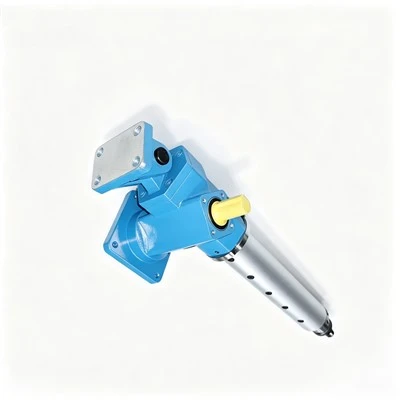
The core of daily maintenance for High Load Linear Actuators is "preventing wear, preventing malfunctions, and preventing aging." No complex tools or professional skills are required. By following a simple maintenance process and focusing on cleaning, lubrication, condition inspection, and environmental protection, you can effectively reduce the failure rate, extend the equipment's service life, and ensure it maintains stable high-load performance long-term, adapting to various operating requirements.
Cleaning and maintenance is the foundation and the easiest step to perform. Its core purpose is to prevent dust and debris accumulation from hindering the actuator's operation and causing wear. After daily use, gently wipe the actuator's surface, telescopic sleeve, and connection points with a dry, soft cloth to remove attached dust, oil stains, and debris. Pay special attention to the telescopic gaps to prevent debris from entering the interior, which could wear internal components or affect telescopic smoothness. For dusty or oily environments, perform a comprehensive cleaning once a week. During cleaning, avoid direct water rinsing or corrosive cleaning agents, as these can damage the actuator's surface coating and internal electrical components. After cleaning, dry the actuator thoroughly with a dry cloth to ensure no moisture remains.
Lubrication maintenance is key to reducing component wear and ensuring smooth operation, focusing on the actuator's moving parts such as telescopic guide rails, connecting bearings, and lead screws. Add special lubricating oil regularly based on usage frequency: for daily high-load, frequent start-stop use, lubricate every 1–2 months; for less frequent use, lubricate every 3–4 months. When lubricating, use only lubricating oil specifically designed for the actuator-avoid low-quality or mismatched greases. Apply a moderate amount, ensuring even coverage of moving parts; excessive grease will attract dust, increasing wear instead. After application, operate the actuator through 1–2 full extension and retraction cycles to ensure even lubricant distribution and optimal performance.
Condition inspection should be a regular routine to identify potential issues early and prevent minor problems from worsening. Before daily use, briefly check that wiring connections are secure, with no looseness, detachment, or damage. If any wiring abnormalities are found, cut off power immediately to avoid short circuits or poor contact affecting operation. After starting the actuator, listen for normal operation sounds; if abnormal noise, jamming, or unusual sounds occur, stop the machine immediately to check for debris jamming or component wear. Do not force the actuator to start, as this may cause further damage. Additionally, regularly check that the actuator extends and retracts smoothly, with no incomplete movement, jamming, or misalignment. Inspect connection fasteners for tightness and tighten them promptly if loose, ensuring even force distribution during operation and preventing component wear or failure due to looseness.
Load and operational standard maintenance effectively prevents overload damage and extends service life. In daily use, strictly adhere to the actuator's load capacity and avoid long-term overloading. Overloading causes motor overheating, increased lead screw wear, and may even result in actuator jamming or motor burnout. Avoid frequent start-stops, as these increase wear on the motor and internal components. If frequent operation is necessary, pause periodically to allow the motor to cool down and reduce wear. Additionally, protect the actuator from external impact or extrusion to prevent deformation and component damage, which would compromise operational stability.
In addition, pay attention to key details during daily maintenance: always cut off power before performing maintenance to ensure safety; do not disassemble internal actuator components arbitrarily. If a fault cannot be self-diagnosed, do not force disassembly, as this may damage components. Regularly clear debris around the actuator to maintain unobstructed operation space and prevent debris from blocking telescopic movement.
In summary, daily maintenance of High Load Linear Actuators does not require complex operations. By adhering to "regular cleaning, regular lubrication, daily inspection, and standardized environmental protection" and performing basic maintenance, you can effectively reduce component wear, prevent malfunctions, ensure the actuator maintains stable high-load performance long-term, extend its service life, reduce operational costs, and meet the needs of various daily operating scenarios.