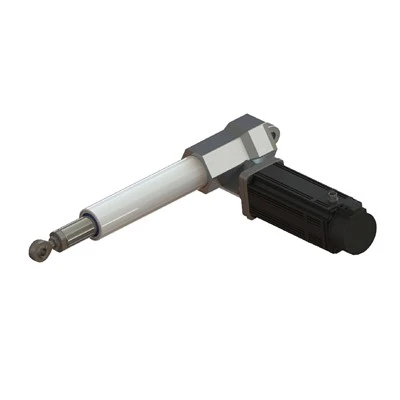
Industrial Electric Actuators are versatile linear motion devices that use electric motors to perform pushing, pulling, lifting, and positioning operations. Because they offer flexible operation and can work with various mechanical structures and automated control systems, they are widely used across multiple industrial sectors. Different types of equipment have different requirements for Industrial Electric Actuators, mainly involving mechanical positioning, material movement, equipment opening and closing, and automated operation.
Automated Production Lines
Automated production lines are among the most common applications of Industrial Electric Actuators. In automated assembly, processing, and inspection equipment, they can be used for workpiece pushing, positioning adjustments, clamping mechanism movement, and work platform lifting. When integrated with control systems, actuators can perform specific movements according to production procedures, helping improve coordination between different manufacturing processes and reduce the need for manual adjustments.
Lifting Platforms and Handling Equipment
Lifting platforms and handling equipment are also important application areas. In machines that require height adjustment, Industrial Electric Actuators can move platforms or supporting structures vertically to meet different working position requirements. For example, they can be used in industrial work platforms, auxiliary handling devices, and mechanical lifting systems to perform lifting and positioning operations.
Packaging Machinery
In packaging machinery, Industrial Electric Actuators are mainly used for opening and closing equipment components, pushing materials, assisting pressing operations, and adjusting mechanical positions. Packaging processes generally include material conveying, positioning, sealing, and finished product discharge. Industrial Electric Actuators can move relevant components according to the machine's operating sequence, helping packaging equipment achieve continuous and automated operation.
Material Conveying Equipment
In material conveying systems, Industrial Electric Actuators can be used to adjust baffles, distribute materials, position guiding mechanisms, and assist material pushing operations. For example, in certain conveying systems, an actuator can control the opening and closing of a baffle to guide materials in a predetermined direction, improving the flexibility of the conveying process.
Warehousing and Logistics Equipment
Warehousing and logistics equipment also require frequent positioning adjustments and mechanical operations. Industrial Electric Actuators can be integrated into automated storage systems, auxiliary material handling mechanisms, and certain lifting devices. They help adjust the positions of movable components and perform mechanical operations, contributing to higher levels of warehouse automation.
Agricultural and Environmental Protection Equipment
In agricultural machinery, Industrial Electric Actuators can be used for lifting and angle adjustment of movable equipment components. In environmental protection equipment, they can operate baffles, valve mechanisms, and other related mechanical devices. In machining equipment, they may be used for worktable adjustment, protective cover opening and closing, and auxiliary positioning.
Industrial Electric Actuators can also be applied in specialized machinery, including equipment that requires automatic posture adjustment, industrial testing devices, and automated inspection mechanisms. These applications often require repeated linear movements according to predetermined procedures, and actuators provide the necessary driving force.
It is important to note that different machines have different operating methods, load conditions, and working environments. Therefore, Industrial Electric Actuators should be selected and installed according to the equipment's movement requirements, load characteristics, and installation conditions.
Overall, Industrial Electric Actuators are used in a wide range of industries, including automated manufacturing, machining, packaging, conveying, warehousing, agriculture, and environmental protection. As industrial automation continues to advance, their applications in various types of machinery are expected to become even more extensive.