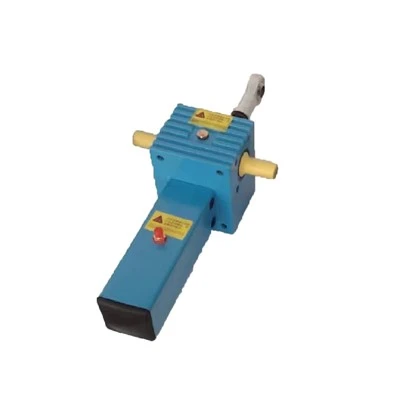
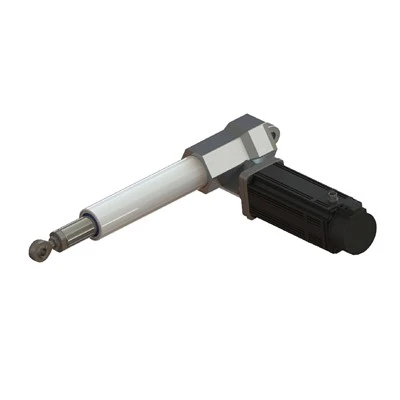
Benefiting from mechanical self-locking, reliable heavy-load performance, no power requirement and simple construction, Trapezoidal Screw Jack finds applications across multiple industries including machinery manufacturing, construction engineering, transportation, mining and metallurgy, and equipment maintenance. It is mostly used for short-stroke static load bearing, heavy object leveling and lifting operations, especially for working conditions where power access is inconvenient or long-term stable support of heavy objects is required.
The machinery processing and equipment manufacturing industry is one of its most common application areas. When large machine tools, stamping equipment, generator sets, air compressors and other heavy equipment arrive for installation, the horizontal precision of the equipment base directly affects operational stability. Such equipment is heavy and requires multi-point support and leveling during installation. Trapezoidal Screw Jack can be arranged at each support point of the base to adjust height incrementally and correct equipment levelness. Before grouting and fixation after equipment positioning, the jacks continuously bear the equipment weight and serve as temporary supports.
It is extensively adopted in construction and steel structure engineering. During the erection of steel structure workshops and stadiums, after steel columns and steel beams are hoisted into place, temporary lifting is needed to adjust elevation and correct the level of steel beams. Multiple Trapezoidal Screw Jacks are deployed for synchronous support to adjust component installation positions. It is widely used in bridge maintenance and bearing replacement projects. When replacing bridge rubber bearings, the bridge superstructure needs to be lifted to the specified height to create space for bearing replacement. Bridge lifting operations impose extremely high requirements on support stability; gradual dropping of support height is unacceptable.
The transportation sector covers vehicle maintenance and rail transit overhaul. In auto repair shops and large fleets, Trapezoidal Screw Jack can lift whole vehicles or axles for chassis inspection and tire replacement during maintenance of heavy trucks, buses and construction machinery chassis. Unlike hydraulic jacks, there is no risk of pressure loss and sinking during long maintenance work. In rail transit, large-tonnage screw jacks lift carriages and separate bogies for component maintenance and replacement during overhaul of subway and train carriages and bogie disassembly. It can also adjust sleeper elevation and correct track flatness during track laying construction.
Working conditions in the mining and metallurgy industry feature harsh environments with heavy dust and unstable power supply at many sites. The purely mechanical structure of Trapezoidal Screw Jack is not easily affected by dust and has a low failure rate. During maintenance of underground mining equipment, it lifts heavy mechanical parts for disassembly of conveyor frames, crushers and hoist components. In metallurgy workshops, hydraulic parts tend to fail in high-temperature environments, while mechanical screw jacks have a wider temperature tolerance range and are used for equipment lifting and component pre-tension support during overhaul of high-temperature heavy equipment such as rolling mills and roller tables. It can also slowly apply pressure to correct workpiece deformation in the straightening process after forging and heat treatment of metallurgical components.
Overall, the core characteristics of scenarios for Trapezoidal Screw Jack are heavy load, low speed, static support and fine height adjustment. It is preferred for occasions requiring high support stability, where hydraulic systems cannot be relied on for long-term pressure retention, or where no power supply is available on site. With stable self-locking properties and a simple, reliable mechanical structure, it plays an important role in installation, maintenance, component leveling and lifting of various heavy equipment, acting as an indispensable lifting and supporting tool in industrial and engineering fields.