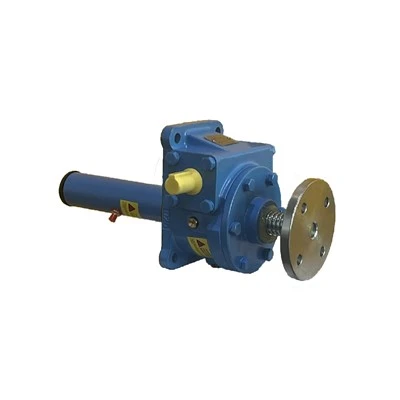
Multi Stage Linear Actuator constitutes precision mechatronic integrated equipment housing internal motors, wiring circuits and delicate transmission components. Water washing, immersion or high-pressure water flushing are forbidden. All daily cleaning focuses on dry dust removal and mild stain elimination, requiring no specialized professional tools and operable by general personnel. Periodic simple cleaning prevents dust-induced jamming, corrosion rust and sealing failure, drastically extending overall equipment service life.
Step 1: Daily Basic Cleaning (For Routine Regular Maintenance)
Prepare lint-free soft cloths and small soft bristle brushes (standard toothbrushes or dedicated dust brushes are acceptable). Cut off all power supply and shut down the unit prior to cleaning to guarantee operational safety.
Wipe the entire exterior of the actuator housing and multi-section telescopic tubes with a dry soft cloth to clear surface floating dust and minor oil stains, paying special attention to dust-prone areas including telescopic tube joints and housing edge corners.
For narrow hard-to-reach gaps such as tube joints, motor ventilation slots and screw crevices, gently sweep accumulated dust outward with a soft bristle brush. Never scrape gaps with hard sharp tools to avoid scratching sealing gaskets and tube plating layers, which would create loose deformed joint clearances.
Step 2: Stubborn Stain Removal
For light oil residue and persistent dirt on equipment surfaces, alcohol, diluents and strong acid/alkali cleaning agents must not be used - these chemicals corrode housing paint coatings and accelerate aging of sealing gaskets. Lightly dampen a lint-free cloth (fully wrung with no dripping water) and gently wipe stained areas. Immediately remove all residual surface moisture with a dry cloth after stain removal to eliminate standing water and prevent moisture infiltration into internal equipment, which could trigger circuit short-circuiting and component rusting.
Step 3: Simple Cleaning and Maintenance of Core Transmission Components (No Disassembly Required)
Lead screws and telescopic transmission gaps accumulate heavy dust buildup, which increases mechanical friction and induces jamming after prolonged service. Sweep dust outward along the lead screw thread lines with a soft bristle brush. Once fully cleaned, apply only a thin uniform coating of specialized lubricating grease across lead screw surfaces. This minimizes friction while blocking dust adhesion. Engine oil and waste lubricants are strictly forbidden for application - such oils easily trap dust to form oil sludge, worsening mechanical jamming malfunctions.
Step 4: Post-Cleaning Inspection & Prohibited Operations
After completing cleaning work, allow the actuator to rest for 1–2 minutes to ensure all surfaces are fully dry. Conduct 2–3 no-load telescoping test cycles after power reconnection to verify smooth unobstructed motion free of jamming or abnormal noise, confirming no residual cleaning debris remains.
Key cleaning prohibitions: Never soak, rinse or blast the unit with high-pressure air guns (high-pressure air forces dust past sealing gaskets into internal transmission assemblies). Disassembly of sealed structural components for cleaning is forbidden, as this compromises the actuator's original waterproof and dustproof protection rating.
Standard maintenance frequency: Conduct simple cleaning once every 1–2 months under normal working environments; shorten the interval to biweekly for heavy dust industrial environments. This maintenance schedule ensures consistent stable equipment operation.

 English
- English
- Français
- Deutsch
- 日本語
- Italiano
- Español
- Português
- русский
- slovenščina
- Eesti
- Polski
- dansk
- O'zbek
- Melayu
- বাংলা
- עברית
- Kreyòl Ayisyen
- Türkçe
- Català
- Svenska
- Čeština
- اردو
- عربي
- हिंदी
- ไทย
- Latviešu
- Lietuvių
- فارسی
- Cymraeg
- bosanski
- slovenčina
- Gaeilgenah Éireann
- 한국어
- українська
- hrvatski
- íslenska
- Ελληνικά
- Srbija jezik (latinica)
- România limbi
- Malti
- Việt Nam
- Nederlands
- Indonesia
- Bai Miaowen
- suomi
- Norsk
- magyar
- Български