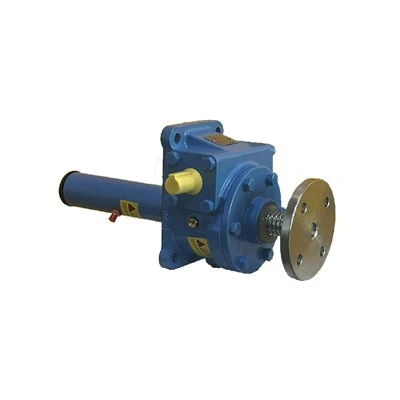
Electric Linear Actuator is a low‑maintenance and long‑service‑life industrial device. Under normal working conditions, frequent servicing such as daily or weekly upkeep is unnecessary; only regular simple inspection plans are required. It ranks among terminal automation devices with extremely low maintenance costs and high stability. Optimized for industrial applications, its housing is made of high‑strength die‑cast aluminum, stainless steel and other wear‑resistant anti‑corrosion materials. Internal movement parts and transmission gears are precisely processed with anti‑rust treatment, and well‑designed sealing structures support long‑term continuous operation with low failure probability and minimal daily maintenance workload.
In standard working conditions with normal temperature, dry atmosphere, low dust and no corrosive substances, the maintenance rhythm for Electric Linear Actuator follows fixed criteria. Daily operations include removing floating dust on equipment surfaces and preventing sundries from blocking heat‑dissipation holes. Basic inspections are carried out every month to check whether power and signal wiring terminals are loose or aged, whether abnormal noise, vibration or jamming occurs during operation, and whether opening‑closing movements are smooth and accurate. In‑depth inspections are conducted every 3 to 6 months to verify normal performance of limit and torque protection devices, as well as proper lubricant level without deterioration or leakage inside gearboxes. No complicated disassembly or commissioning is required, and ordinary maintenance staff can finish all these tasks independently.
Many users mistakenly believe that industrial driving equipment needs frequent maintenance. Different from pneumatic and hydraulic equipment, Electric Linear Actuator requires no frequent replacement of air sources or hydraulic oil, nor repeated calibration of pressure parameters. Core wearing parts can serve for several years, and replacement is barely needed under normal use. Only in harsh working conditions shall inspection frequency be raised moderately, while complicated frequent servicing is still unnecessary. For dusty environments, clean heat‑dissipation holes and housing gaps monthly to avoid heat dissipation failure caused by dust accumulation. For mildly corrosive conditions, check anti‑corrosion coating integrity on housings quarterly. For high‑humidity scenarios, focus on waterproof sealing performance inspection.
Two typical mistakes including over‑maintenance and insufficient maintenance should be avoided. Frequent disassembly and repeated adjustment of limit and torque parameters will break factory‑calibrated accuracy and trigger operating failures. On the contrary, zero maintenance over a long period will lead to dust accumulation, wiring oxidation and lubricant drying‑up, shortening equipment service life. Besides, the device operates automatically without manual intervention during running and requires no on‑site attendance. In general, maintenance of Electric Linear Actuator follows the principle of light inspection, sufficient protection and minimal disassembly. Under normal conditions, annual maintenance activities are no more than ten with low time consumption, low difficulty and low cost. It fully meets the low‑maintenance demands of long‑term stable industrial operation and serves as a cost‑effective option among automation equipment.