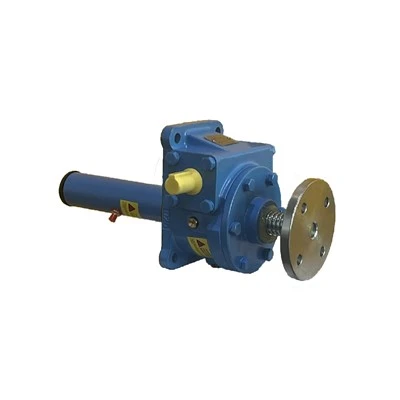
As precision linear‑transmission lifting equipment, the Worm Screw Jack consists of core components including worm gear, worm shaft, bearings and sealing assemblies. Extended continuous operation may lead to wear, oil leakage and jamming. Standardized daily maintenance is critical to extend service life, preserve operating accuracy and prevent safety failures. Maintenance work shall be implemented routinely and standardly, covering daily inspection, periodic servicing and shutdown preservation.
Daily basic inspections shall be completed before each startup. Operators shall visually examine equipment appearance and clear dust, iron scraps, oil stains and other impurities from the machine body, lead screw and transmission parts. Foreign particles entering meshing areas will accelerate component wear. Meanwhile, pay close attention to lubricant conditions inside the housing. Verify whether the oil level shown on the oil sight glass falls within the standard range. Check if the lubricant has turned turbid, black or mixed with metal chips. Top up lubricant of the same grade when the oil level is low. Never mix different types of lubricants. Perform a 3‑5‑minute no‑load test run after startup. Listen to operating sound. Properly‑functioning units run smoothly without abnormal noise. Stop operation immediately if jamming or strange sounds occur for fault diagnosis.
Periodic special maintenance shall be carried out according to operation frequency. For heavily‑used units, replace lubricant every three months. For infrequently‑operated equipment, perform oil changes every six months. Complete oil replacement after the machine cools down. Fully drain old oil and clean internal residues before refilling new lubricant, so residual impurities will not abrade the worm gear and worm shaft. Check all connecting bolts and base fasteners. Continuous operation may loosen fasteners through minor vibration. Tighten each bolt sequentially to prevent equipment offset and shaking. Inspect shaft‑end and housing seals. Promptly replace aged, deformed or damaged gaskets and oil seals to stop oil leakage and water ingress, which would otherwise cause internal metal corrosion.
Special preservation shall be arranged for units with exposed lead screws. Regularly clean dirt on lead‑screw surfaces and apply specialized grease to avoid rust and mechanical sticking. Check dust boots and replace damaged ones at once, so dust cannot invade screw threads and undermine lifting accuracy. Monitor operating temperature while the equipment is working. Temperature rise at the housing and bearing positions shall not exceed 40℃. Excessive temperature usually points to poor lubrication, component wear or overloading. Shut down the unit for troubleshooting in such cases.
Preservation measures are equally important for long‑term idle equipment. When shutdown lasts more than one week, clean the whole machine. Coat exposed metal parts such as the worm gear, worm shaft and lead screw with anti‑rust oil. Cover the unit for dust‑proof and water‑proof protection and store it in dry and ventilated locations to avoid rust caused by moisture, sunlight exposure or rain. Conduct monthly no‑load lifting trials to keep transmission parts flexible and prevent seizure from long‑term static storage. Besides, maintain maintenance records covering oil‑change timelines, servicing items and fault events. Standardized record‑based management can greatly reduce failure rates and support long‑term accurate and stable operation of the Worm Screw Jack.