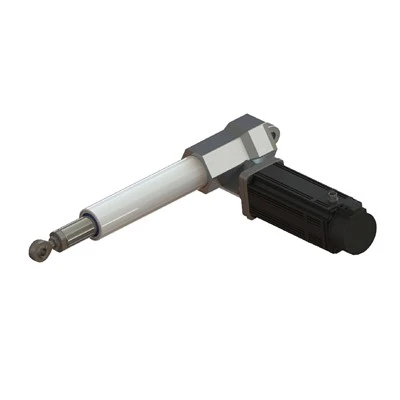
Featuring mechanical self-locking properties of trapezoidal threads, Trapezoidal Screw Jacks offer static load-holding capacity, which acts as their core advantage over ball screw jacks. Many operators therefore mistakenly believe such jacks can support loads for a long duration without unloading. In fact, this practice carries multiple hidden dangers. Only short-time load holding is permitted per specifications; long-term load retention is strictly prohibited.
First of all, sustained loads lead to irreversible fatigue damage to key components. Bearing parts including lead screws, worm gears and worms endure constant static stress without relief. Gradually accumulated metal fatigue triggers tiny deformation on screw threads and collapse of worm gear tooth surfaces. Such permanent damage undermines structural strength and load accuracy, later causing jamming and insufficient loading capacity during operation.
Secondly, continuous loading accelerates lubrication failure and excessive wear. Lubricating grease inside the jack isolates metal contact surfaces to reduce friction, dissipate heat and prevent rust. When the jack remains loaded for extended hours, thread surfaces are tightly pressed together. Grease is squeezed out and thinned, losing its protective effect. Direct metal-to-metal contact generates continuous static oxidative wear. In addition, grease will age, harden and deteriorate under persistent pressure. Subsequent operation will involve dry friction, greatly raising the possibility of thread seizing and even permanent component failure.
Thirdly, declining self-locking capacity creates severe safety risks. The self-locking function relies on thread lead angle and contact friction. Long-term loading causes slight plastic deformation on contact surfaces and changes friction coefficients, undermining self-locking stability. Slow sinking and micro-displacement may occur for loads that can normally be locked firmly. If heavy machinery or precision workpieces are lifted, shifting or tipping may happen, resulting in equipment damage and personal injury.
Apart from the above issues, long-term loaded operation damages overall structural precision. Lasting stress on housings, bearings and shaft sleeves brings micro-deformation and coaxiality deviation. Consequently, the jack will operate less smoothly with impaired lifting accuracy and louder noise. According to industrial standards, Trapezoidal Screw Jacks are only allowed short-duration load holding. Loads must be released and the lead screw fully retracted after work, enabling all components to return to a stress-free status. This measure eliminates safety risks and effectively extends overall equipment service life.