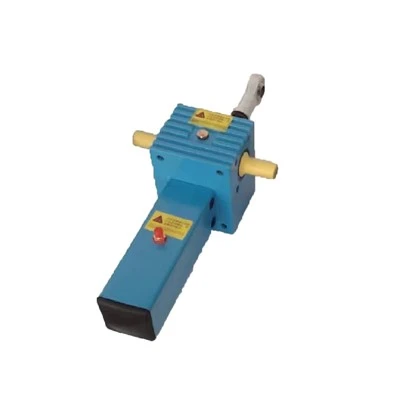
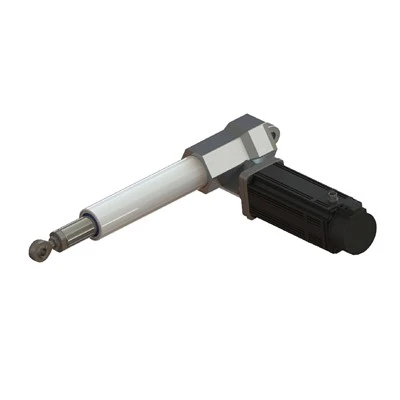
Although a Heavy Duty Screw Jack is designed for applications involving substantial loads, this does not mean that it can be used beyond its normal load capacity. Every mechanical device has an appropriate operating range, and excessive loading can change the way the equipment and its components are subjected to force. Therefore, overloading should be avoided during actual operation.
When the actual load exceeds the appropriate capacity of the equipment, load-bearing and transmission components may be subjected to excessive stress. The screw, threads, and connecting structures may experience increased forces. If the jack is repeatedly operated under excessive load, operating resistance may increase and movement may become difficult. In more serious situations, components may become deformed or damaged.
Overloading can also affect the stability of the lifting process. When the load is too heavy, the overall force distribution may change. If the ground is uneven, the load is off-center, or the support position is inappropriate, abnormal forces may become even greater. Therefore, the fact that a jack can initially begin lifting does not mean that it is appropriate to continue operating it under excessive load.
Before using a Heavy Duty Screw Jack, determine the nature of the load and consider the actual working conditions. The equipment should be selected appropriately for the intended task. The fact that the jack can move a load does not mean that additional force should be applied to lift a heavier load. In particular, when a load has already been raised, additional force should not be used to force the jack to continue lifting.
If the jack becomes increasingly difficult to operate, the screw moves irregularly, unusual noises occur, or the equipment becomes noticeably unstable, stop the operation immediately. Do not attempt to overcome the problem by turning the operating mechanism more forcefully or using additional tools to increase the applied force, as this may further increase the load on the equipment.
In addition to the total weight of the load, load distribution must also be considered. For example, if the center of gravity of the load is not positioned appropriately relative to the support point, the jack may experience additional off-center loading. Even if the total weight does not appear to exceed the normal operating range, uneven loading may cause certain components to experience significantly greater forces. Therefore, both the load and its position should be considered during operation.
When several Heavy Duty Screw Jacks are used together, it should not be assumed that the combined capacity is simply the sum of the individual capacities. The load may not be distributed evenly among all support points, and one jack may carry a greater portion of the load. During multi-point lifting, attention should therefore be paid to coordination between the support points and the overall stability of the load.
If the equipment originally selected cannot adequately handle the actual task, operation should be stopped and the working method should be reassessed rather than continuing with an overloaded jack. This approach helps protect the equipment and reduces the risk of unexpected movement during lifting.
In conclusion, a Heavy Duty Screw Jack should not be used beyond its appropriate load capacity. The equipment should be selected according to the actual application, while the load, support condition, and operating behavior should be monitored during use. Avoiding overload, minimizing uneven loading, and never forcing the equipment to operate are fundamental practices for maintaining reliable performance.