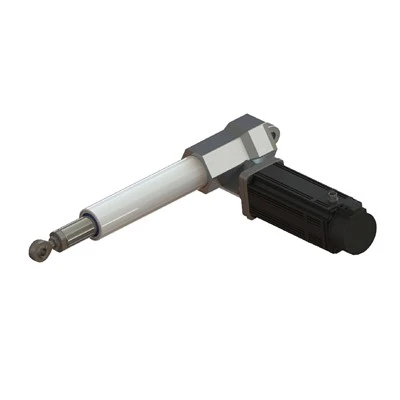
When using a Heavy Duty Screw Jack to lower a heavy load, the operation should be stable and controlled. Compared with lifting, the lowering process requires particular attention to the movement of the load because the load distribution may change as the height decreases. If the load is lowered too quickly or the force is unevenly distributed, the load may move suddenly, tilt, or shift.
Before lowering the load, inspect the working area. Make sure that no people, tools, or other obstacles are underneath or around the load that could interfere with the lowering process. At the same time, confirm that the load is positioned securely, that the screw jack is not noticeably tilted, and that the top of the jack remains properly engaged with the load. If the load or support position has shifted significantly, correct the condition before beginning the lowering operation.
During the lowering process, operate the jack slowly and continuously. Do not release the load suddenly or operate the jack too quickly. Closely monitor changes in the height and position of the load. If one side of the load moves faster than another, the load may become tilted. When multiple support points are used, it is especially important to monitor their movement and maintain coordinated operation to prevent one support point from lowering too quickly and carrying an excessive portion of the load.
During lowering, never place your hands, feet, or other parts of your body in areas where the load could move or create a pinch point. This is particularly important when working with machinery, steel structures, or large components. As the distance between the load and the ground or support structure decreases, the risk of trapping or crushing increases. Operators should therefore maintain a safe distance throughout the process.
The condition of the Heavy Duty Screw Jack should also be monitored. If noticeable jamming, abnormal noise, irregular screw movement, or excessive movement of the jack occurs during lowering, stop immediately. Do not continue by applying additional force simply to complete the lowering operation. First determine whether the problem is related to insufficient lubrication, abnormal thread conditions, uneven loading, or a change in the support position.
As the load approaches its final support position, the operating speed should be reduced further. At this stage, the distance between the load and the supporting surface is small. Lowering too quickly may cause impact when the load reaches the support. Therefore, operate the jack more carefully near the final position so that the load makes gradual and controlled contact with the supporting surface.
After the load has been lowered, do not remove the jack immediately. First confirm that the load has been fully transferred to a reliable support structure and check for any tilting, movement, or partial suspension. Once the load is confirmed to be stable, the jack can be removed according to the actual work procedure.
When multiple Heavy Duty Screw Jacks are used to lower a heavy load together, the support points should be adjusted in a coordinated and controlled manner. Do not focus on the movement of only one jack while ignoring changes in the overall position and balance of the load.
In general, when lowering a heavy load with a Heavy Duty Screw Jack, the key principles are to inspect the work area in advance, operate slowly, maintain stability, monitor the load distribution, and stop immediately if an abnormal condition occurs. Particular care should be taken as the load approaches its final position to ensure a smooth and controlled lowering process.