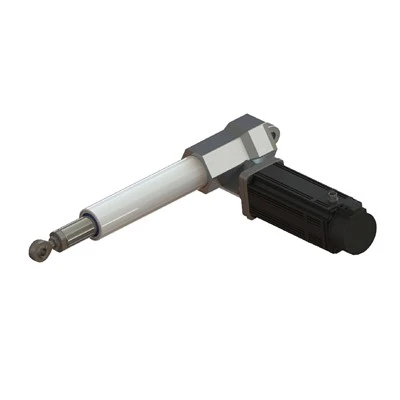
When running under standard working conditions with proper maintenance, the Right Angle Bevel Gearbox will not generate harsh or disturbing noise. Its overall operating noise level is low with smooth and even sound, complying with industrial equipment noise standards and classifying it as a low-noise transmission component. Its low-noise performance originates from structural and process design. First, the core transmission bevel gears adopt high-precision involute tooth profile machining with smooth tooth surfaces and high meshing accuracy. During operation, gears engage closely with uniform clearance to avoid gear impact and misaligned friction, fundamentally reducing transmission noise. Second, the unit adopts a closed cast iron housing with thick, solid material and good sealing performance. It can effectively block slight mechanical noise generated by gear operation and bearing friction, prevent outward noise diffusion and greatly lower the overall noise level of the running equipment.
Under normal operating conditions, the Right Angle Bevel Gearbox only generates faint, low-pitched and uniform running sound. The no-load running noise of a single unit can be controlled within 60 decibels, and the noise under loaded operation will not exceed 75 decibels, making it fully suitable for workshop, farmland and production line working environments. However, obvious sharp abnormal noise, roaring sound, periodic impact sound or vibration noise during operation are not normal phenomena and serve as direct warning signs of equipment faults. Common causes of noise faults include insufficient or degraded lubricating oil inside the housing leading to dry friction and harsh noise of gears and bearings; gear wear, tooth surface peeling and excessive meshing clearance after prolonged operation causing transmission impact; insecure equipment fixation and excessive coaxiality deviation triggering vibration noise; impurities and iron scraps entering the housing and jamming gear transmission; and aged or loose bearings producing abnormal friction sound. In daily use, regular lubricating oil refills, installation precision calibration and component wear inspections can maintain low-noise operation for a long time without concerns about conventional noise pollution.