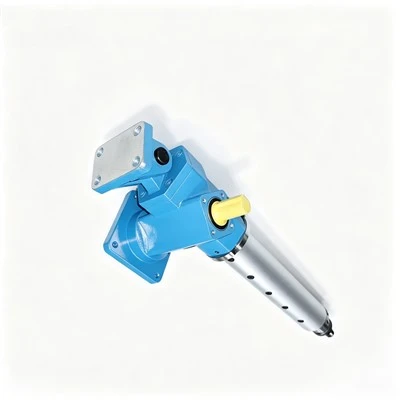
Short stroke screw jacks are widely applied for micro-adjustment, precision leveling and short-distance linear lifting in compact industrial spaces. Featuring compact structure, high positioning accuracy and stable mechanical performance, these mini linear actuators require standardized installation and scientific operation to maintain long-term precision and service life. Different from standard long-stroke screw jacks, short stroke models are more sensitive to installation deviation and irregular operation. This article provides a complete set of standardized installation, commissioning and daily usage guidelines for short stroke screw jacks, suitable for on-site industrial operation and equipment maintenance reference.
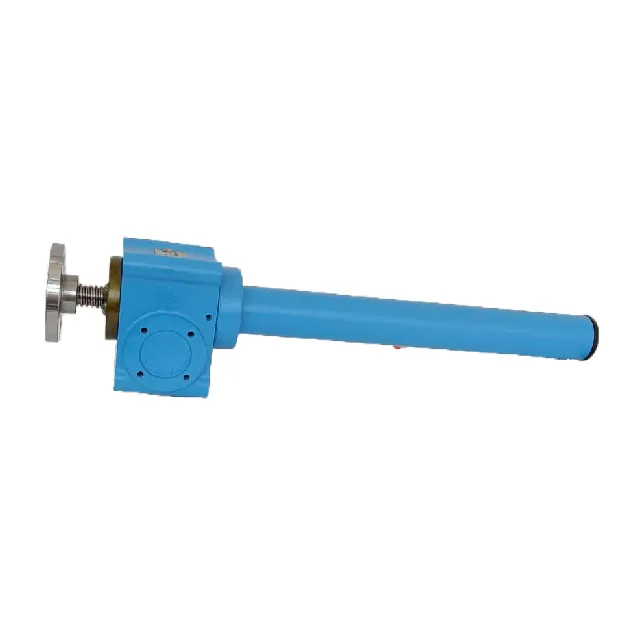
1. Pre-installation Inspection
Before formal installation, comprehensive inspection of the equipment and working environment is essential to avoid installation errors that affect micro-adjustment accuracy:
Product Appearance and Structure Check: Inspect the jack housing, screw rod and sealing components for deformation, scratches, rust or grease leakage. Confirm that the internal transmission structure is flexible without jamming by manually rotating the input shaft.
Parameter and Accessory Verification: Check the screw head type, transmission ratio and load range to match actual working conditions. Verify the completeness of supporting accessories such as mounting bolts, limit parts and connecting flanges.
Working Environment Confirmation: Ensure the installation space is clean, flat and free of obstacles. The working area shall avoid severe vibration, heavy impact and corrosive media to guarantee stable short-stroke micro-operation.
Load Condition Check: Confirm that the actual working load is within the rated range. Overload operation is strictly prohibited, as it will cause thread deformation and accuracy loss of short-stroke precision adjustment.
2. Standard Installation Methods
Short stroke screw jacks support vertical, horizontal and inverted installation modes. All installation forms must ensure firm fixation and stress balance to prevent tiny displacement deviation during operation:
Vertical Installation: This is the most common installation method for vertical lifting and platform leveling. Place the jack on a horizontal and rigid base, fix the mounting holes with high-strength bolts, and ensure the screw rod is perpendicular to the horizontal plane. Keep the load acting on the center of the screw rod to avoid lateral force and eccentric load, which will cause jitter in short-stroke movement.
Horizontal Installation: Suitable for horizontal micro-pushing and gap calibration. Fix the jack on the side mounting bracket, adjust the horizontal level of the equipment, and ensure the screw rod runs horizontally without deflection. Reinforce the fixed support to prevent equipment shaking during reciprocating micro-travel operation.
Inverted Installation: Used for special suspension lifting scenarios. Firmly fix the jack housing on the top mounting base, check the screw rod's vertical freedom of movement, and reserve sufficient short-stroke movement space to avoid collision with surrounding structures.
Multi-jack Synchronous Installation: For large platform micro-leveling with multiple jacks, ensure all jacks are installed on the same horizontal reference plane with consistent installation height. Connect the input ends through standard transmission accessories to guarantee synchronous displacement and consistent micro-adjustment accuracy.
3. Pre-operation Commissioning Steps
After installation, strict no-load and load commissioning is required to eliminate installation errors and ensure stable short-stroke operation:
No-load Debugging: Run the jack manually or electrically without load, and test the full short-stroke travel repeatedly. Check for abnormal noise, jamming, unsmooth movement or obvious vibration. Confirm that the screw rod moves vertically and returns to the origin accurately.
Limit Position Calibration: Adjust the upper and lower limit positions according to the actual required short stroke. Avoid over-stroke operation, which may damage the internal thread structure and affect long-term precision adjustment performance.
Load Test Operation: Conduct low-load and rated-load trial operation step by step. Observe the stability of equipment lifting and the consistency of positioning accuracy to ensure no displacement deviation during micro-travel adjustment.
4. Standard Daily Usage Specifications
Standardized daily operation is the key to maintaining the high precision and long service life of short stroke screw jacks. Users must follow the following usage norms:
Strictly Prohibit Overload and Eccentric Load: Short stroke jacks are designed for precise micro-adjustment, not heavy impact load. Always work within the rated load range; avoid lateral force, tilt load and sudden impact load to prevent thread wear and accuracy failure.
Control Operating Speed Reasonably: Adopt low-speed stable operation for precision micro-calibration. Avoid long-term high-speed operation, which will cause increased friction, heat accumulation and reduced positioning accuracy.
Standard Power and Manual Operation: For electric models, start and stop slowly to avoid instantaneous start-stop impact; for manual models, rotate evenly and gently without violent cranking, ensuring uniform micro-displacement output.
Keep Working Environment Clean: Prevent dust, debris and oil dirt from adhering to the screw rod and sealing parts, so as not to affect the flexibility of short-stroke movement and cause positioning deviation.
5. Routine Maintenance After Use
Simple and regular maintenance can effectively maintain the long-term precision stability of short stroke screw jacks and reduce failure rate:
Regular Lubrication: Check the internal lubricating grease regularly. Supplement or replace professional industrial grease periodically to ensure low-friction operation of gears and screw threads.
Sealing Inspection: Check the dust-proof and oil-proof sealing rings regularly to avoid grease leakage and dust infiltration, which may affect internal transmission accuracy.
Fastener Tightness Check: Regularly inspect the mounting bolts and connecting parts to prevent loosening caused by long-term micro-vibration, ensuring stable installation accuracy.
Long-term Shutdown Protection: If the equipment is idle for a long time, reset the screw rod to the initial position, clean the surface, and apply anti-rust oil for protection, storing it in a dry and clean environment.
6. Common Operation Precautions
Do not modify the internal structure or dismantle the jack privately, which will damage the original precision and mechanical balance.
Stop operation immediately if abnormal noise, jamming or inaccurate positioning occurs, and conduct inspection after shutdown.
Avoid continuous high-frequency cyclic operation beyond the rated duty cycle to prevent equipment overheating and component wear.
Match the appropriate screw head and connection mode according to the load type to ensure uniform force on the equipment.
Conclusion
The performance and service life of short stroke screw jacks are closely related to standardized installation and scientific usage. Strict pre-installation inspection, standardized multi-mode installation, rigorous commissioning and standardized daily operation can effectively maintain the micro-adjustment precision and structural stability of the equipment. With correct operation and regular maintenance, the short stroke screw jack can provide long-term stable and accurate linear micro-motion solutions for precision automation, laboratory testing, mechanical leveling and other scenarios.