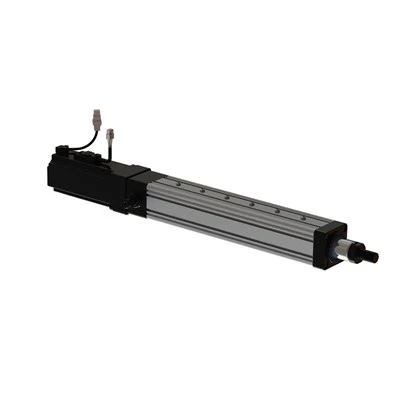
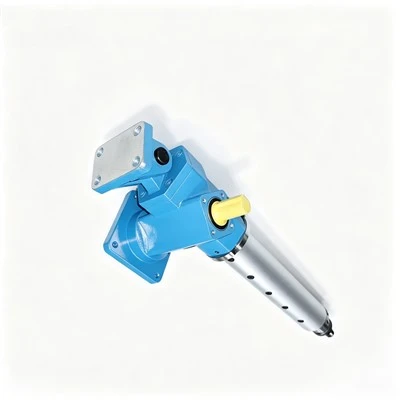
The nut is the core moving component of the nut-driven screw jack, responsible for converting the screw's rotational motion into linear displacement to drive the load. As the key friction pair between the nut and the screw, proper lubrication is critical to ensuring smooth operation, reducing wear, extending service life, and maintaining the jack's precision positioning performance. Incorrect or insufficient lubrication will lead to increased friction, abnormal noise, thread wear, and even jamming of the nut and screw, which directly affects the jack's operational stability and safety. This article details the correct lubrication methods, lubricant selection, lubrication frequency, and key precautions for the nut of nut-driven screw jacks, providing a professional and practical guide for industrial maintenance personnel.

Unlike traditional screw-moving jacks, the nut of the nut-driven screw jack is in continuous sliding or rolling contact with the rotating screw during operation, bearing both the load pressure and frictional force. Effective lubrication forms a thin oil film between the nut and screw threads, which not only reduces direct metal-to-metal contact and friction loss but also prevents rust and corrosion, isolates dust and debris, and ensures the nut moves smoothly along the screw without backlash or jamming. Therefore, scientific lubrication is an essential part of the daily maintenance of nut-driven screw jacks, which can significantly reduce maintenance costs and avoid unexpected equipment failures.
1. Importance of Nut Lubrication for Nut-driven Screw Jacks
Proper lubrication of the nut is closely related to the overall performance and service life of the nut-driven screw jack, with the following key roles:
Reduce Friction and Wear: The lubricating oil film separates the nut and screw threads, reducing frictional resistance during relative motion, avoiding excessive wear of thread surfaces, and preventing thread damage such as scratches and pitting[4].
Maintain Precision Positioning: Insufficient lubrication will increase friction and backlash between the nut and screw, affecting the jack's positioning accuracy and repeatability. Proper lubrication ensures smooth linear motion of the nut, maintaining micron-level positioning performance[10].
Extend Service Life: By reducing wear and preventing corrosion, lubrication effectively extends the service life of the nut, screw, and other core components, reducing the frequency of component replacement and maintenance costs[1][4].
Prevent Jamming and Abnormal Noise: A sufficient lubricating oil film ensures the nut moves flexibly along the screw, avoiding jamming caused by excessive friction, and eliminating abnormal noise during operation[3][4].
Protect Against Corrosion and Contamination: The lubricant forms a protective layer on the thread surface, isolating moisture, dust, and other contaminants, preventing rust and corrosion of the nut and screw, especially in harsh industrial environments[1][3].
2. Selection of Lubricants for Nut Lubrication
The selection of lubricants for the nut of nut-driven screw jacks must be based on the jack's working conditions, load capacity, operating speed, and environmental factors. The correct lubricant can maximize lubrication effectiveness, while improper selection will lead to lubrication failure and component damage. The following are the common types of lubricants and selection guidelines:
2.1 Common Types of Lubricants
Lithium-based Grease: The most widely used lubricant for nut-driven screw jack nuts, with excellent temperature resistance (-20℃ ~ +120℃), water resistance, and load-bearing capacity. It has good adhesion, can form a stable oil film on the thread surface, and is suitable for most general industrial applications, including light-to-medium load, normal temperature, and dry environments[1][4].
Calcium-based Grease: Suitable for low-temperature, light-load applications (-10℃ ~ +60℃), with good water resistance but poor high-temperature performance. It is not recommended for high-speed or high-load operation, as it is prone to softening and loss at high temperatures[4].
Synthetic Grease: Including synthetic lithium-based grease, polyurea grease, etc., with superior high-temperature resistance (+150℃ ~ +200℃), low-temperature resistance (-40℃ ~ -20℃), and anti-wear performance. It is suitable for harsh working conditions, such as high-speed, heavy-load, high-temperature, or low-temperature environments, and precision applications requiring long-term lubrication[1][3].
Lubricating Oil: Suitable for high-speed operation scenarios, with good fluidity and heat dissipation, which can quickly form an oil film and take away frictional heat. Common types include gear oil and machine oil, which are suitable for nut-driven screw jacks with high input speed and continuous operation[2][4].
2.2 Lubricant Selection Guidelines
Based on Load Capacity: For heavy-load jacks (rated load > 100kN), select lubricants with high load-bearing capacity and anti-wear performance, such as synthetic grease or high-viscosity gear oil, to withstand high pressure and reduce wear[1][8].
Based on Operating Speed: For high-speed operation (input speed > 120rpm), choose lubricating oil with good fluidity to ensure rapid lubrication and heat dissipation; for low-speed operation (input speed < 50rpm), select grease with strong adhesion to avoid lubricant loss[1][4].
Based on Environmental Conditions: In high-temperature environments (above 75℃), select synthetic grease with high-temperature resistance; in low-temperature environments (below -20℃), choose low-temperature-resistant synthetic grease; in humid, dusty, or corrosive environments, select water-resistant and anti-corrosion grease (such as lithium-based grease) and match it with protective measures[1][3].
Based on Precision Requirements: For precision positioning applications (positioning accuracy < ±0.05mm), select lubricants with low viscosity and good fluidity to avoid excessive lubricant resistance affecting positioning accuracy[7][10].
3. Correct Lubrication Methods for Nuts
The lubrication method of the nut depends on the jack's structure, installation orientation, and working conditions. The following are the three common lubrication methods, with detailed operation steps to ensure uniform lubrication and avoid lubricant waste or insufficient lubrication:
3.1 Manual Grease Injection Lubrication (Most Common Method)
This method is suitable for most nut-driven screw jacks, especially those with lubrication ports on the nut or gearbox. The operation steps are as follows:
Safe Shutdown and Inspection: Before lubrication, cut off the power supply of the jack, implement lockout-tagout (LOTO) procedures, and hang a "Maintenance in Progress, Do Not Start" sign to prevent accidental startup[3]. Confirm that the nut and screw have completely stopped moving, and check for dust, debris, or old lubricant on the thread surface.
Clean the Lubrication Port and Threads: Use a clean cloth or brush to wipe the lubrication port of the nut and the exposed thread surface of the screw, removing dust, debris, and old, deteriorated lubricant to avoid mixing impurities into the new lubricant, which may cause thread wear[3][4].
Inject Lubricant: Use a grease gun to inject the selected grease into the lubrication port of the nut. Inject slowly and evenly until the grease overflows from the gap between the nut and the screw or the exhaust port (if equipped), indicating that the internal threads of the nut are fully filled with lubricant[3][4].
Distribute Lubricant Evenly: Manually rotate the screw (or start the jack for empty load operation for 1-2 cycles) to make the lubricant evenly distributed on the thread surface of the nut and screw, ensuring that every part of the friction pair is covered by the oil film[3].
Clean Up Residual Lubricant: Use a clean cloth to wipe off the residual lubricant on the surface of the nut, screw, and lubrication port to avoid dust adhesion and lubricant contamination[3].
3.2 Oil Bath Lubrication (For Enclosed Nuts)
This method is suitable for nut-driven screw jacks with enclosed nut structures (the nut is installed inside the gearbox). The gearbox is filled with lubricating oil, and the nut is immersed in the oil to achieve continuous lubrication. The operation steps are as follows:
Check the Oil Level and Oil Quality: Open the oil sight glass or oil drain plug of the gearbox to check the oil level (the oil level should be 1/2 ~ 2/3 of the nut's height) and the oil quality. If the oil is discolored, emulsified, or contains impurities, drain the old oil completely[1][2].
Clean the Gearbox: If the old oil is severely contaminated, inject an appropriate amount of cleaning oil into the gearbox, start the jack for empty load operation for 5-10 minutes, and then drain the cleaning oil to ensure the internal gearbox is clean[3].
Add New Lubricating Oil: Inject the selected lubricating oil into the gearbox through the oil filling port, and check the oil level through the oil sight glass until it reaches the standard position[2][4].
Test Run: Start the jack for empty load operation for 2-3 cycles to ensure the lubricating oil circulates smoothly and the nut operates without abnormal noise or jamming[3].
3.3 Automatic Lubrication (For High-Frequency Operation)
This method is suitable for nut-driven screw jacks in continuous, high-frequency operation (such as automated production lines), equipped with an automatic lubrication system (grease pump or oil pump) to realize timed and quantitative lubrication. The operation steps are as follows:
Check the Automatic Lubrication System: Inspect the lubricant storage tank, pipeline, and nozzle of the automatic lubrication system to ensure there is no leakage, blockage, or damage[3].
Fill the Lubricant: Add the selected lubricant into the storage tank of the automatic lubrication system, and confirm the lubricant level meets the requirements[3].
Set Lubrication Parameters: Set the lubrication interval and lubrication amount according to the jack's working conditions (load, speed, operating time). Generally, the lubrication interval is 2-8 hours, and the lubrication amount is adjusted according to the nut size and operating intensity[1][3].
Test the Lubrication System: Start the automatic lubrication system to test whether the lubricant can be accurately delivered to the nut's lubrication port, and check for oil leakage or insufficient lubrication[3].
4. Lubrication Frequency and Adjustment Principles
The lubrication frequency of the nut is determined by the jack's operating conditions, load capacity, operating speed, and environmental factors. A reasonable lubrication frequency ensures effective lubrication while avoiding lubricant waste. The following are the standard lubrication frequency and dynamic adjustment principles:
4.1 Standard Lubrication Frequency
Light Load, Intermittent Operation (rated load < 50kN, daily operating time < 4 hours): Manual grease injection every 1-2 months; oil bath lubrication oil change every 6-12 months[1][4].
Medium Load, Normal Operation (rated load 50kN ~ 150kN, daily operating time 4-8 hours): Manual grease injection every 2-4 weeks; oil bath lubrication oil change every 3-6 months[1][4].
Heavy Load, Continuous Operation (rated load > 150kN, daily operating time > 8 hours): Manual grease injection every 1-2 weeks; oil bath lubrication oil change every 1-3 months; automatic lubrication system runs every 2-8 hours[1][3][4].
4.2 Dynamic Adjustment Principles
Environmental Adjustment: In high-temperature, humid, dusty, or corrosive environments, shorten the lubrication frequency by 30%-50% to compensate for the accelerated deterioration of lubricants[1][3].
Condition Monitoring Adjustment: Regularly check the nut's operation status. If abnormal noise, increased friction, or thread wear is found, increase the lubrication frequency and check the lubricant quality[1][3].
Seasonal Adjustment: In winter (low temperature), use low-temperature-resistant lubricants and appropriately increase the lubrication frequency; in summer (high temperature), use high-temperature-resistant lubricants and shorten the lubrication interval[1][4].
PDCA Cycle Optimization: Establish a lubrication maintenance record, record the lubrication time, lubricant type, and jack operation status, regularly check the lubrication effect, and adjust the lubrication frequency and method according to the actual situation to form a closed-loop optimization[1].
5. Key Precautions for Nut Lubrication
Do not mix different types, brands, or grades of lubricants, as this will cause chemical reactions, reduce lubrication performance, and even damage the nut and screw threads[3][4].
Before lubrication, ensure the jack is in a safe shutdown state, implement LOTO procedures, and wear personal protective equipment (PPE) such as protective gloves and goggles to avoid personal injury[3].
The lubricant amount should be appropriate: too little will lead to insufficient lubrication, while too much will cause excessive resistance, heat generation, and lubricant waste, and may even cause the nut to jam[3][4].
Regularly check the lubricant quality: if the lubricant is discolored, emulsified, has a peculiar smell, or contains metal particles, replace it immediately to avoid wear of the nut and screw[1][3].
For jacks used in harsh environments (dust, moisture, corrosion), after lubrication, install a protective cover or bellows on the nut and screw to prevent lubricant contamination and component corrosion[1][3].
Lubrication should be carried out together with the jack's regular inspection: check the thread wear, nut tightness, and lubrication port blockage while lubricating, and handle potential problems in a timely manner[3][4].
Do not use expired or deteriorated lubricants, as they cannot form an effective oil film and will accelerate the wear of the nut and screw[1][3].
Conclusion
The lubrication of the nut is a key link in ensuring the stable operation and long service life of the nut-driven screw jack. By selecting the appropriate lubricant, adopting the correct lubrication method, and following a reasonable lubrication frequency, the friction and wear between the nut and screw can be effectively reduced, the jack's precision positioning performance can be maintained, and unexpected equipment failures can be avoided. Maintenance personnel should strictly follow the lubrication specifications detailed in this article, combine the actual working conditions of the jack to adjust the lubrication plan dynamically, and establish a complete lubrication maintenance record. This not only ensures the nut-driven screw jack operates reliably and stably in various industrial applications but also maximizes its service life and reduces maintenance costs.