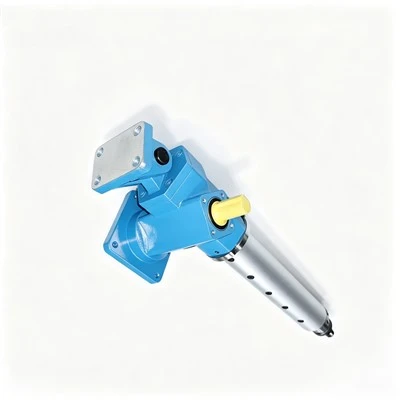
Long-stroke industrial linear actuators are specialized electric drive components designed for large-displacement, long-travel linear motion. Different from standard short-stroke actuators, they feature extended telescopic distance, stable long-cycle operation and strong environmental adaptability, widely replacing traditional hydraulic and pneumatic cylinders in medium and large industrial automation scenarios. To ensure stable operation, precise displacement control and extended service life, it is essential to clarify the scientific application scope and standardized operating precautions. This article systematically sorts out the applicable scenarios and key operation specifications of long-stroke industrial linear actuators, providing reliable guidance for industrial installation, debugging and daily use.

Application Scope of Long-stroke Industrial Linear Actuator
With ultra-long effective stroke, clean electric drive and intelligent controllability, this series of linear actuators is perfectly suitable for industrial equipment and automation systems that require large-distance reciprocating movement, wide-range position adjustment and long-term continuous operation. Its core application coverage is as follows:
1. Industrial Automated Production Systems
Long-stroke linear actuators are extensively applied to large automated assembly lines, material handling mechanisms and tooling adjustment equipment. They complete full-stroke lifting of large work platforms, long-distance pushing of automated feeding devices and overall height calibration of assembly frames. Solving the travel limitation of conventional actuators, they support synchronous linkage of multiple devices and stable cyclic operation, improving the overall automation level of production lines.
2. Intelligent Logistics and Warehousing Equipment
In stereoscopic warehouses, intelligent sorting lines and loading and unloading auxiliary equipment, long-stroke actuators realize long-distance telescopic adjustment of shelf lifting mechanisms, full-travel expansion of cargo carrying platforms and height switching of large sorting baffles. With stable low-jitter operation and low-maintenance design, they adapt to long-term unattended and high-frequency working scenarios of modern intelligent logistics systems.
3. New Energy and Environmental Protection Machinery
For photovoltaic power generation, wind power equipment and environmental protection dust removal systems, the actuators achieve long-stroke angle adjustment of power generation brackets, telescopic control of ventilation and heat dissipation components, and opening and closing drive of large environmental protection baffles. The electric drive mode features zero oil pollution and strong weather resistance, adapting to outdoor and semi-outdoor new energy operation environments.
4. Stage, Exhibition and Simulation Equipment
Large stage lifting platforms, exhibition display stands and motion simulation devices require ultra-long travel and ultra-smooth linear motion. Long-stroke industrial linear actuators deliver stepless stable lifting and telescopic displacement without impact and vibration, meeting the safe and precise motion requirements of entertainment facilities and simulation training equipment.
5. Construction and Auxiliary Engineering Machinery
In construction auxiliary equipment, industrial door control and infrastructure debugging mechanisms, the actuators undertake long-distance pushing, lifting and stretching tasks. They adapt to complex construction site environments and meet the large-displacement adjustment demands of engineering auxiliary mechanical structures.
6. Large Medical and Precision Auxiliary Equipment
Applied to large medical nursing platforms, rehabilitation training equipment and precision testing auxiliary brackets, the long-stroke actuators realize stable long-travel displacement adjustment. Featuring low noise, zero pollution and high operational stability, they comply with the clean and safe operating standards of medical and laboratory scenarios.
Key Operating Precautions for Long-stroke Industrial Linear Actuator
Long-stroke telescopic structures are more sensitive to load state, installation accuracy and operating environment than standard actuators. Standardized operation and daily management can effectively avoid structural deflection, positioning deviation and component damage, ensuring long-term stable performance.
1. Load and Stress Control Precautions
Always operate within the rated thrust range. Overload operation is strictly prohibited, especially during full-stroke extension, as excessive load will cause screw bending, cylinder deformation and permanent accuracy loss. Eccentric load and lateral force must be avoided in long-travel operation; ensure the load acts on the central axis of the actuator to prevent jamming, abnormal noise and unilateral structural wear.
2. Stroke and Limit Operation Specifications
Do not operate beyond the preset effective stroke. The built-in limit devices are used for protection rather than long-term limit positioning. Frequent impact on the upper and lower limits will damage the sensor and transmission structure, resulting in failure of stroke calibration. Reserve a reasonable margin during full-stroke operation to ensure smooth and unobstructed telescopic movement.
3. Speed and Cycle Working Requirements
Match the operating speed according to actual working conditions. High-speed operation is not allowed under heavy load, which will cause severe friction, heat accumulation and accelerated component aging. Strictly follow the rated duty cycle; avoid long-term continuous high-frequency operation beyond the standard range to prevent motor overheating and burnout. For long-cycle automatic operation, configure intermittent heat dissipation procedures.
4. Installation and Environment Adaptation Rules
Ensure vertical or horizontal installation levelness to avoid structural tilt during long-stroke movement. All mounting bolts must be fastened firmly to prevent equipment loosening and displacement vibration during reciprocating operation. Adapt to the ambient temperature and protection grade; avoid long-term operation in corrosive, high-dust and high-humidity environments without protective upgrading. Regularly clean the telescopic rod surface to prevent dust and debris from entering the internal sealing structure.
5. Electrical and Control Operation Standards
Match the voltage and control mode strictly in accordance with the product parameters. Do not modify the control circuit and PLC program privately to avoid signal disorder and displacement errors. For servo and variable-frequency control models, complete parameter debugging before formal load operation to ensure stable speed switching and accurate positioning. Cut off the power supply in time during equipment shutdown and maintenance to avoid accidental startup.
6. Daily Maintenance and Inspection Precautions
Regularly check the tightness of mounting parts, sealing performance and telescopic rod surface condition. Supplement professional lubricating grease periodically to keep the internal transmission system low-friction. Timely inspect limit sensors and overload protection devices to ensure sensitive and effective protection functions. For long-term idle equipment, retract the actuator to the initial position, clean and maintain it, and store it in a dry environment.
Conclusion
Long-stroke industrial linear actuators cover a wide range of industrial long-travel motion scenarios, providing clean, efficient and intelligent linear motion solutions for automated production, logistics warehousing, new energy, engineering machinery and other fields. Standardizing application scenarios and strictly abiding by operating precautions can effectively maintain the precision stability of long-stroke telescopic movement, reduce failure rates, and extend the overall service life of the equipment, realizing long-term stable and low-cost industrial operation.