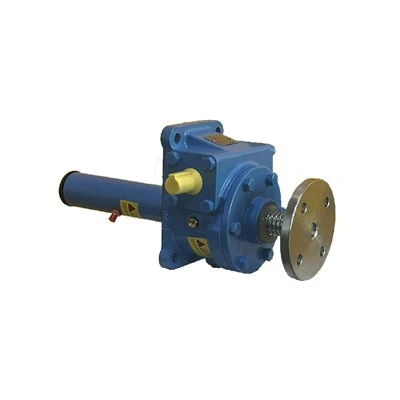
There is no universal fixed interval for lubricant replacement of the Right Angle Bevel Gearbox. The schedule should be determined comprehensively based on total operating hours, working environment, load conditions and service frequency. Appropriate oil replacement guarantees stable operation and extends the service life of the gearbox. Distinct replacement standards apply to different application scenarios. Clear specifications cover initial running-in oil change, routine oil change and oil change under harsh conditions, suitable for diverse industrial production applications.
The initial oil change for brand-new units is easily overlooked yet critical. Internal gears, bearings and other components of a new Right Angle Bevel Gearbox stay in the running-in phase. Tiny machining burrs and metal debris on component surfaces produce fine metal powder during initial rotation, which mixes into the lubricant. For this reason, regardless of working conditions, brand-new equipment must receive a full lubricant replacement after roughly 300 consecutive operating hours. Meanwhile, thoroughly clear residual impurities inside the housing. A delayed first oil change allows metal particles to accelerate internal component wear, triggering subsequent faults such as abnormal noise, overheating and jamming, and impairing overall equipment precision and service life.
Next comes the routine oil replacement cycle under standard working conditions. Normal working environments refer to ambient temperature, dust-free clean air, stable load, no frequent start-stop or overload and dry ventilated surroundings, applicable to most general-purpose machinery. After completing the initial oil change, follow a regular replacement cycle of every 2000 working hours or every six months – whichever comes first. Even if actual operating hours do not reach the standard threshold, lubricant should still be replaced after six months of storage and operation. Long-term static placement leads to gradual lubricant oxidation, viscosity reduction and performance degradation. Deteriorated oil loses lubricating and cooling capacity and cannot satisfy equipment operation demands.
Shorter replacement cycles are required under harsh working conditions. Many industrial equipment operates in complicated severe environments, demanding frequent oil replacement to prevent faults induced by failed lubricant. Working scenarios with high dust concentration, heavy workshop grease pollution, outdoor open-air deployment, moisture prone to condensation, high-temperature enclosed spaces, continuous full or overloaded operation, frequent start-stop and forward-reverse rotation cause lubricant to absorb dust, water vapor and contaminants, resulting in rapid oxidation and viscosity loss. Under such circumstances, lubricant needs replacement every 1000 working hours or three months, also adopting the rule of whichever milestone arrives first.
Apart from scheduled oil changes, adjust maintenance plans flexibly according to real-time lubricant status. During routine patrols, if lubricant turns dark and turbid, presents emulsified whitening, contains metallic particles, shows abnormal viscosity change or strange odor, shut down the machine and replace lubricant immediately, regardless of planned maintenance schedules. When replacing oil, fully drain all old lubricant and settled impurities before adding matched fresh lubricant with an appropriate filling volume. Avoid overfilling or insufficient oil level, which undermines lubrication and heat dissipation performance of the Right Angle Bevel Gearbox.

 English
- English
- Français
- Deutsch
- 日本語
- Italiano
- Español
- Português
- русский
- slovenščina
- Eesti
- Polski
- dansk
- O'zbek
- Melayu
- বাংলা
- עברית
- Kreyòl Ayisyen
- Türkçe
- Català
- Svenska
- Čeština
- اردو
- عربي
- हिंदी
- ไทย
- Latviešu
- Lietuvių
- فارسی
- Cymraeg
- bosanski
- slovenčina
- Gaeilgenah Éireann
- 한국어
- українська
- hrvatski
- íslenska
- Ελληνικά
- Srbija jezik (latinica)
- România limbi
- Malti
- Việt Nam
- Nederlands
- Indonesia
- Bai Miaowen
- suomi
- Norsk
- magyar
- Български