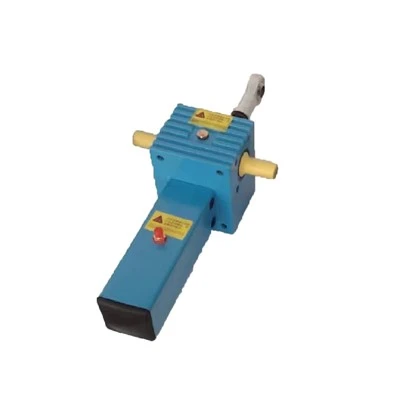
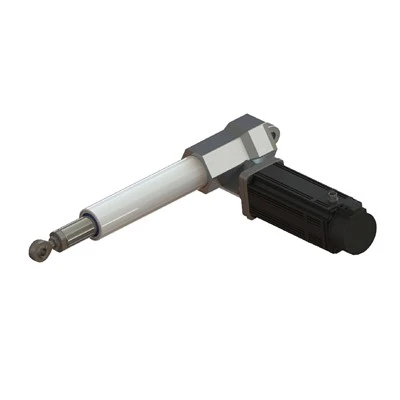
Linear Servo Electric Cylinders and conventional hydraulic cylinders are both widely used linear actuators in industrial equipment. They can perform pushing, pulling, clamping, pressing, and positioning operations. However, they differ in their power sources, transmission principles, control methods, system components, and maintenance requirements. Selecting the appropriate actuator requires a comprehensive evaluation of the operating load, motion control requirements, working environment, and existing power system.
In terms of power source, a Linear Servo Electric Cylinder typically uses a servo motor to drive a mechanical transmission mechanism that converts rotary motion into linear movement of the push rod. The control system adjusts the motor's operating state according to process requirements, allowing control over the direction of movement, speed, and target position. A conventional hydraulic cylinder, by contrast, relies on pressurized oil supplied by a hydraulic pump. Control valves direct the oil into the appropriate chamber of the cylinder, and the resulting fluid pressure moves the piston and piston rod.
In terms of control, a Linear Servo Electric Cylinder is generally convenient to integrate with automated control systems. When equipped with suitable feedback devices, it can support closed-loop control of position, speed, and motion profiles. This makes it suitable for applications requiring multiple positioning points, staged movement, or coordinated motion sequences. Conventional hydraulic cylinders can also achieve sophisticated control through proportional valves, servo valves, displacement sensors, and associated control systems. However, such systems typically require more complex arrangements and careful management of hydraulic components, oil condition, and control strategies.
Regarding force and load capacity, hydraulic systems can generate substantial force through high operating pressures and are widely used in heavy equipment, construction machinery, and large pressing machines. The load capacity of a Linear Servo Electric Cylinder depends on its motor, transmission mechanism, and mechanical structure. For applications involving high thrust, sustained heavy loads, or special operating conditions, the suitability of an electric actuator must be evaluated against the actual requirements. Its control method alone does not determine its load capacity.
The two actuator types also differ in their supporting systems. A Linear Servo Electric Cylinder typically requires a servo motor, drive, controller, feedback devices, and mechanical transmission components. A conventional hydraulic cylinder generally requires a hydraulic power unit, reservoir, piping, control valves, and hydraulic oil. The electric system focuses on coordination between electrical control and mechanical transmission, while the hydraulic system depends on a complete hydraulic power and control arrangement. For applications where reducing hydraulic piping or avoiding hydraulic oil management is desirable, an electric solution may offer advantages, although actual system cost and complexity must still be evaluated.
Maintenance requirements also differ. A Linear Servo Electric Cylinder requires attention to lubrication of the screw or other transmission components, mechanical connections, wear on moving parts, and the condition of the electrical system. A hydraulic cylinder requires monitoring of hydraulic oil cleanliness, seal condition, pipe connections, oil leakage, and hydraulic component performance. Both types of equipment require routine inspection, but the maintenance procedures and technical knowledge involved are different.
Overall, Linear Servo Electric Cylinders offer advantages in flexible electrical control and automation integration, while conventional hydraulic cylinders remain valuable in high-force applications and established hydraulic systems. The appropriate choice should be based on control requirements, load, working environment, system cost, and maintenance conditions.