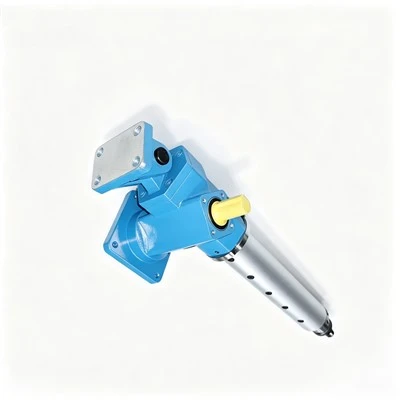
The printing industry relies heavily on precise linear motion, stable load-bearing, and reliable positioning to ensure consistent print quality, efficient production, and operational safety-from small-format digital printers to large-scale offset and flexographic printing machines. Screw jacks, as versatile mechanical linear actuators, have become indispensable components in modern printing equipment, thanks to their inherent self-locking feature, customizable load capacity, and precise motion control. Unlike hydraulic or pneumatic systems that require complex auxiliary equipment and frequent maintenance, screw jacks offer a cost-effective, low-maintenance solution that adapts to the diverse needs of printing processes, from material handling to machine adjustment and precision positioning.

Printing applications typically utilize screw jacks with load capacities ranging from 250 pounds to 15 tons, with options available for heavier loads up to 250 tons to meet the demands of large-scale printing machinery. Their compact design, combined with flexible mounting configurations and self-locking performance, makes them ideal for integration into various printing equipment, solving key pain points such as unstable material positioning, imprecise gap adjustment, and inefficient maintenance. Below is a detailed breakdown of the core applications of screw jacks in the printing industry, highlighting their practical value and unique advantages in different production links.
1. Web Tension & Roll Positioning in Continuous Printing
Continuous printing processes-including flexographic, gravure, and web offset printing-rely on consistent web tension and precise roll positioning to avoid material wrinkles, misalignment, and print defects. Screw jacks play a critical role in adjusting the position of web rolls, tension rollers, and guide rollers, ensuring the printing substrate (paper, film, or foil) moves smoothly through the machine without deviation.
Equipped with high-precision trapezoidal or ball screws, screw jacks enable micro-adjustments of roll height and angle with positioning accuracy up to ±0.01mm, ensuring uniform tension across the entire web width. Their self-locking design, a key advantage of acme screw jacks, allows them to maintain the set position without external power, preventing roll slippage or tension fluctuations during high-speed printing operations. In laminating machines, screw jacks are specifically used to position rolls and adjust the gap between laminating rollers, ensuring tight bonding of layers without air bubbles or uneven pressure.
2. Slitter & Cutter Adjustment for Precision Cutting
After printing, substrates often need to be cut into specific sizes or shapes using slitters and cutters-an operation that requires extremely precise positioning of cutting blades to ensure clean, uniform edges and consistent dimensions. Screw jacks are widely used to adjust the height, angle, and spacing of slitter knives and cutting heads, adapting to different substrate thicknesses and cut sizes.
The rigid structure and anti-rotation design of screw jacks prevent blade movement during high-frequency cutting, eliminating uneven cuts and reducing material waste. They can be easily integrated into both manual and automated slitting systems, allowing operators to quickly adjust blade positions via hand cranks or motor-driven controls. For large-format slitters, multiple screw jacks can be synchronized using connecting shafts and bevel gearboxes, ensuring uniform adjustment across all cutting blades and maintaining consistent cutting quality across the entire web width.
3. Conveyor Height & Material Handling Optimization
Material handling is a critical part of the printing workflow, involving the transportation of raw materials (paper rolls, ink cartridges) and finished products (printed sheets, rolls) between different stages of the production line. Screw jacks are used to adjust the height of conveyors, stackers, and material carts, ensuring seamless integration between printing, cutting, folding, and packaging equipment.
With customizable stroke lengths (up to 5500mm in tension load) and load capacities, screw jacks can easily adjust conveyor heights to match the inlet and outlet of printing machines, reducing material jams and improving workflow efficiency. They are also used to adjust carts for roll removal, making it easier to load and unload heavy paper rolls without damaging the equipment or substrate. The compact design of screw jacks allows them to be installed in tight spaces, making them suitable for small-scale printing workshops and large production facilities alike.
4. Printing Machine Frame & Workbench Leveling
The stability of printing machine frames and workbenches directly affects print quality-even minor misalignment or unevenness can cause registration errors, blurred prints, and equipment wear. Screw jacks are used to level machine frames and workbenches, ensuring they remain stable under heavy loads and high-speed operation.
Made of high-strength ductile iron or welded carbon steel housings, heavy-duty screw jacks can withstand the weight of large printing machines while providing precise leveling adjustments. Their anti-corrosion coatings and sealed designs protect internal components from ink, dust, and moisture-common contaminants in printing environments-extending service life and reducing maintenance needs. For large-scale printing presses, multiple screw jacks are synchronized to ensure uniform leveling across the entire machine frame, preventing deformation and ensuring consistent print registration.
5. Maintenance & Accessibility Enhancement
Printing equipment requires regular maintenance-including roller replacement, blade sharpening, and internal component inspection-to ensure long-term performance. Screw jacks simplify maintenance tasks by providing controlled lifting and positioning of heavy machine components, allowing technicians to easily access hard-to-reach areas.
For example, screw jacks can lift printing rollers or press heads to a safe maintenance position, eliminating the need for heavy lifting equipment and reducing the risk of injury. Their manual or motor-driven operation allows for precise control of lifting speed and position, ensuring safe and efficient maintenance. Additionally, screw jacks with safety nuts and anti-backlash devices provide added security during maintenance, preventing accidental movement of heavy components.
Conclusion
Screw jacks have become a cornerstone of modern printing equipment, supporting critical operations from web tension control and precision cutting to material handling and maintenance. Their self-locking performance, precision positioning, and low-maintenance design address the unique challenges of the printing industry, ensuring consistent print quality, improved operational efficiency, and reduced downtime. As printing technology continues to evolve-with higher speeds, larger formats, and more complex workflows-screw jacks will remain essential components, adapting to new demands through customization and technological advancement.