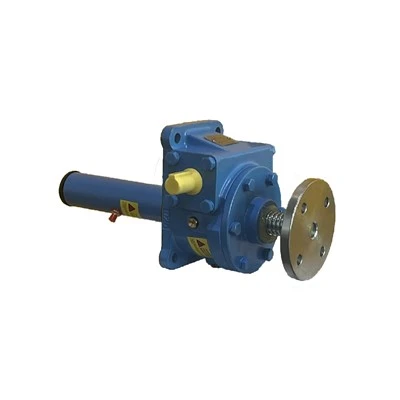
Bevel Gear Box
Key Considerations for Greasing a Bevel Gear Box
Proper lubrication is critical for maintaining the performance, efficiency, and lifespan of a bevel gear box, a mechanical component commonly used in steering systems, industrial machinery, and automotive applications. Greasing ensures smooth gear operation, reduces wear, and prevents overheating. However, incorrect lubrication practices can lead to premature failure, contamination, or safety hazards. Below are essential guidelines for greasing a bevel gear box effectively.

1. Select the Right Grease
The choice of lubricant depends on the operating conditions of the bevel gear box:
Load and Speed: High-load applications require extreme-pressure (EP) greases with additives like molybdenum disulfide (MoS₂) to resist wear.
Temperature Range: For high-temperature environments (e.g., above 120°C/248°F), use synthetic greases with high dropping points. In cold climates, opt for low-temperature greases to avoid stiffening.
Water Resistance: If the gearbox is exposed to moisture (e.g., in outdoor or marine settings), select water-resistant greases (e.g., lithium-complex or calcium-sulfonate-based) to prevent corrosion.
Compatibility: Ensure the new grease is compatible with existing lubricants to avoid chemical reactions that degrade performance.
2. Determine the Correct Greasing Frequency
Over-lubrication can be as harmful as under-lubrication. Follow these steps:
Consult the Manufacturer's Guidelines: Refer to the bevel gear box manual for recommended greasing intervals based on load, speed, and environmental conditions.
Monitor Operating Conditions: In dusty, humid, or high-temperature environments, shorten the lubrication cycle. For clean, low-stress applications, extend intervals.
Use Condition-Based Monitoring: Install sensors to track grease degradation (e.g., via vibration analysis or temperature monitoring) and adjust schedules accordingly.
3. Apply the Right Quantity of Grease
Avoid Overfilling: Excess grease can cause churning, leading to overheating and energy loss. It may also leak out, contaminating surrounding components.
Use Precision Tools: Employ grease guns with calibrated nozzles or automatic lubrication systems to control the amount dispensed.
Fill to 25–50% of Gearbox Capacity: As a general rule, leave enough space for thermal expansion and air circulation. For sealed units, follow manufacturer-specified volumes.
4. Follow Proper Greasing Techniques
Clean the Fittings: Before injecting grease, wipe dirt or old grease from the zerk fittings (grease nipples) to prevent contamination.
Purge Old Grease: In re-lubrication, pump new grease until old grease exits the seals, ensuring complete replacement.
Distribute Evenly: Rotate the gearbox manually (if possible) during greasing to ensure lubricant reaches all contact surfaces, including bearings and gear teeth.
5. Safety Precautions
Wear Protective Gear: Use gloves and goggles to avoid skin contact with grease, which may contain harmful additives.
Ventilate the Area: Some greases emit fumes during application; work in well-ventilated spaces or use respiratory protection.
Lockout/Tagout (LOTO): If the bevel gear box is part of a larger machine, de-energize and isolate it before maintenance to prevent accidental startup.
6. Post-Greasing Checks
Inspect for Leaks: After operation, check for grease leakage around seals or fittings, which may indicate overfilling or damaged components.
Monitor Performance: Listen for unusual noises (e.g., grinding or whining) or vibrations, which could signal inadequate lubrication or misalignment.
Document Maintenance: Record greasing dates, types, and quantities to track trends and optimize future schedules.
Conclusion
Greasing a bevel gear box is a straightforward yet vital task that demands attention to detail. By selecting the appropriate lubricant, adhering to schedules, applying precise quantities, and following safety protocols, operators can ensure reliable gearbox performance and extend its service life. Regular maintenance not only reduces downtime but also lowers long-term repair costs, making it a worthwhile investment in mechanical reliability.
For complex systems or critical applications, consult a lubrication specialist or the gearbox manufacturer to tailor practices to specific needs.