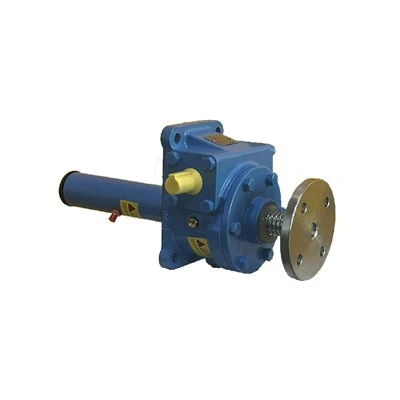
A Hand Crank Screw Jack consists mainly of metal components, including the screw, threaded parts, and various connecting structures. During use or storage, these components may be exposed to moisture, air, dust, and other contaminants. When such conditions persist for an extended period, oxidation may occur on the metal surface, gradually resulting in rust and corrosion.
A humid environment is one of the common causes of rust on a Hand Crank Screw Jack. When the equipment is stored or operated in an area with high humidity, moisture in the air can remain on exposed metal surfaces. In poorly ventilated warehouses, damp workshops, or other areas where moisture is likely to accumulate, water may evaporate slowly and remain on the metal for an extended period, increasing the risk of corrosion.
Rainwater and standing water can cause similar problems. If a Hand Crank Screw Jack is used outdoors and not cleaned after exposure to rain, moisture may remain on the screw, threads, joints, and other metal components. If the equipment is then stored without drying, prolonged contact between the metal surface and water can lead to rust formation.

Dust and mud can also contribute indirectly to corrosion. Hand Crank Screw Jacks used at construction sites, maintenance areas, or outdoor locations may accumulate dust, soil, and other particles on their surfaces. These contaminants can retain moisture and keep the metal surface damp for longer periods, creating conditions that may accelerate corrosion.
Insufficient lubrication and surface protection should also be considered. The screw and threaded components are frequently exposed to movement and friction. If they are not properly maintained, their protective condition may deteriorate over time. Once the metal surface is directly exposed to air and moisture, the possibility of corrosion increases. Therefore, routine maintenance should not focus only on whether the jack can lift normally; the condition and protection of exposed metal surfaces should also be monitored.
Improper long-term storage is another possible cause. For example, placing a Hand Crank Screw Jack directly on a damp floor, in an area where water may accumulate, or outdoors for extended periods can expose the equipment to continuous moisture. Poor ventilation can also allow humid air to remain around the equipment, increasing the likelihood of corrosion.
The way the equipment is handled after use can also influence rust formation. If the Hand Crank Screw Jack comes into contact with water, mud, or other contaminants during operation and is not cleaned afterward, these substances may remain on the surface for a long time. This is particularly important for the screw and threaded areas, where a mixture of moisture and dirt may increase friction during subsequent operation.
To reduce the possibility of rust, water, mud, dust, and other contaminants should be removed from the equipment after use whenever necessary. The Hand Crank Screw Jack should be stored in a relatively dry and well-ventilated area. Equipment that remains unused for an extended period should also be inspected periodically so that early signs of corrosion can be identified and addressed.
In general, rust on a Hand Crank Screw Jack is commonly associated with moisture, humid environments, contaminants, insufficient protection, and improper storage conditions. Regular cleaning, keeping metal surfaces dry, improving storage conditions, and carrying out appropriate maintenance can help reduce the likelihood of corrosion and support the normal working condition of the screw and threaded components.