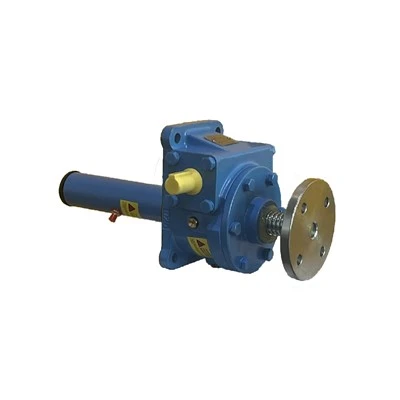
Mechanical wear on a Trapezoidal Low Speed Screw Jack is a natural phenomenon during long-term use, particularly on components such as the screw and nut. However, unnecessary friction and wear can be reduced through proper operation and regular maintenance. In daily use, attention should therefore be given to cleaning, lubrication, operating methods, and routine inspection.
First, the screw and moving components should be kept clean. Dust, powder, sand, and other contaminants in industrial environments may accumulate on the screw surface. If they are not removed promptly, they can increase friction between moving components. The screw surface should therefore be inspected regularly and contaminants should be removed in a timely manner, especially when the screw jack is used in a dusty working environment.
Second, proper lubrication should be maintained. The screw and nut are moving components that require suitable lubrication during operation. Appropriate lubrication can reduce friction and help the screw jack operate more smoothly. If lubrication is neglected for an extended period, operating resistance may gradually increase and component wear may accelerate. Lubrication should therefore be scheduled according to actual operating frequency and environmental conditions.
Improper operation should also be avoided. When using a Trapezoidal Low Speed Screw Jack, lifting and lowering should be performed according to normal operating procedures. Sudden, frequent, or forced operation should be avoided. If the equipment develops significant hesitation, abnormal noise, or increased operating resistance, operation should be stopped and the equipment should be inspected instead of forcing it to continue working. Excessive operating force may accelerate wear on moving components.
Stable installation is another important factor. If the screw jack shifts during operation or if its contact with the supported equipment is unstable, uneven loading may occur and certain components may experience additional friction. Before use, the installation position should be stable and secure. The equipment should also be observed during lifting to ensure that obvious displacement or instability does not occur.
For equipment that has been used for an extended period, regular condition inspections are recommended. During inspection, check the screw surface for unusual wear, scratches, or corrosion, and check the nut and connection points for looseness. During operation, pay attention to changes in sound, movement, and operating resistance. Significant changes compared with normal operation may indicate that further inspection is needed.
The working environment can also affect wear. In humid, dusty, or heavily contaminated environments, cleaning and maintenance should be strengthened to prevent contaminants from remaining on moving components for long periods. When the equipment is stored, a dry and suitable environment should be maintained to reduce the risk of corrosion on metal components such as the screw.
In addition, reasonable operating schedules should be considered. If the equipment is operated at a high frequency for extended periods, appropriate inspections and maintenance should be arranged according to actual working conditions. When long-term support is required, reliable auxiliary support should be used when appropriate rather than relying on the screw jack to maintain an unsuitable working condition for an extended period.
Reducing wear does not depend on a single measure. Instead, it requires a combination of regular cleaning, appropriate lubrication, correct operation, stable installation, and routine inspection. For a Trapezoidal Low Speed Screw Jack, maintaining good maintenance habits and addressing abnormal operating conditions promptly can help reduce unnecessary mechanical wear and support smooth, stable operation over the long term.