Abstract
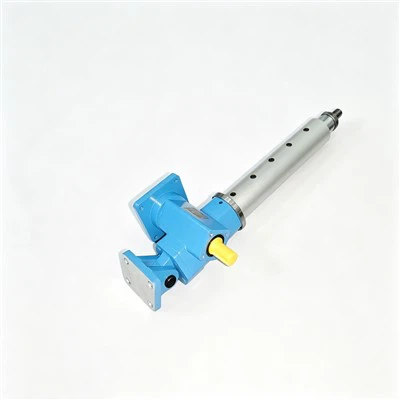
Heavy-duty long-stroke screw jacks play a crucial role in various industrial applications where high load capacity and long vertical displacement are required. Selecting the appropriate drive mode is essential to ensure optimal performance, efficiency, and reliability of these screw jacks. This article explores different drive modes available for heavy-duty long-stroke screw jacks and discusses their advantages, disadvantages, and suitable application scenarios.

1. Introduction
Heavy-duty long-stroke screw jacks are mechanical devices used to lift, lower, or position heavy loads over relatively long distances. They are widely employed in industries such as construction, mining, material handling, and heavy machinery manufacturing. The drive mode of a screw jack determines how it converts input power into linear motion, influencing factors such as speed, torque, precision, and energy consumption.
2. Manual Drive Mode
2.1 Description
Manual drive involves using a handwheel or a crank to rotate the screw of the screw jack. This rotation causes the nut to move linearly along the screw, thereby lifting or lowering the load. It is a simple and straightforward drive method that does not require an external power source.
2.2 Advantages
Cost-Effective: Manual screw jacks are generally less expensive compared to those with powered drive modes as they do not involve complex electrical or hydraulic components.
Simple Operation: They are easy to understand and operate, making them suitable for applications where basic lifting or lowering is required without the need for precise control.
No Power Dependency: In areas with limited or no access to electricity, manual screw jacks can still function effectively, providing a reliable lifting solution.
2.3 Disadvantages
Limited Load Capacity and Speed: The force that can be applied manually is limited, which restricts the maximum load capacity and the speed at which the load can be lifted or lowered.
Labor-Intensive: For heavy loads or long strokes, manual operation can be physically demanding and time-consuming, leading to operator fatigue.
Lack of Precision: It is difficult to achieve precise positioning of the load using manual drive, especially when dealing with fine adjustments.
2.4 Application Scenarios
Manual heavy-duty long-stroke screw jacks are suitable for applications such as small-scale construction projects, maintenance work in remote areas, and simple lifting tasks in workshops where high precision and speed are not critical.
3. Electric Drive Mode
3.1 Description
Electric drive uses an electric motor to rotate the screw of the screw jack. The motor can be directly connected to the screw or through a gearbox to adjust the speed and torque. Electric screw jacks are often equipped with control systems that allow for precise positioning and speed regulation.
3.2 Advantages
High Load Capacity and Speed: Electric motors can generate significant torque, enabling heavy-duty long-stroke screw jacks to handle large loads and operate at relatively high speeds.
Precision Control: With the help of advanced control systems, such as variable frequency drives (VFDs) and servo controllers, electric screw jacks can achieve precise positioning and smooth motion control.
Automation Capability: They can be easily integrated into automated systems, allowing for remote operation and synchronization with other equipment in a production line.
Low Maintenance: Electric motors generally require less maintenance compared to hydraulic systems, reducing downtime and operating costs.
3.3 Disadvantages
Initial Cost: Electric screw jacks are typically more expensive than manual ones due to the cost of the electric motor, control system, and associated electrical components.
Power Consumption: They consume electrical energy, which can be a concern in applications where energy efficiency is a priority or in areas with high electricity costs.
Sensitivity to Power Fluctuations: Voltage fluctuations or power outages can affect the operation of electric screw jacks, potentially causing damage to the equipment or interrupting the lifting process.
3.4 Application Scenarios
Electric heavy-duty long-stroke screw jacks are widely used in industries such as automotive manufacturing, aerospace, and material handling systems where high precision, high speed, and automation are required. They are also suitable for applications where frequent lifting and lowering operations are performed.
4. Hydraulic Drive Mode
4.1 Description
Hydraulic drive uses a hydraulic pump to generate pressurized fluid, which is then directed to a hydraulic cylinder connected to the screw jack. The pressure of the fluid causes the piston in the cylinder to move, which in turn rotates the screw and lifts the load.
4.2 Advantages
Extremely High Load Capacity: Hydraulic systems can generate very high forces, making them ideal for heavy-duty applications where extremely large loads need to be lifted.
Smooth Operation: Hydraulic screw jacks provide smooth and continuous motion, which is beneficial for applications where shock loads or jerky movements need to be avoided.
Overload Protection: The hydraulic system can be designed with built-in safety features, such as pressure relief valves, to protect the equipment from damage in case of overloading.
Variable Speed Control: By adjusting the flow rate of the hydraulic fluid, the speed of the screw jack can be easily controlled, allowing for both slow and fast lifting operations.
4.3 Disadvantages
High Initial Cost and Complexity: Hydraulic systems are more complex and expensive to install and maintain compared to manual and electric systems. They require a hydraulic pump, hoses, valves, and other components, which increase the overall cost.
Fluid Leakage: There is a risk of hydraulic fluid leakage, which can not only cause environmental pollution but also lead to a loss of system pressure and reduced performance.
Noise and Heat Generation: Hydraulic pumps can generate significant noise and heat during operation, which may require additional noise reduction and cooling measures.
4.4 Application Scenarios
Hydraulic heavy-duty long-stroke screw jacks are commonly used in heavy industries such as mining, steel mills, and shipbuilding, where extremely high loads need to be lifted and precise control is required in harsh environments.
5. Conclusion
The choice of drive mode for heavy-duty long-stroke screw jacks depends on various factors, including load capacity, speed requirements, precision, automation needs, cost considerations, and environmental conditions. Manual drive is suitable for simple and low-cost applications with limited load and speed requirements. Electric drive offers a good balance between performance, precision, and automation capabilities, making it a popular choice in many industrial settings. Hydraulic drive is the preferred option for extremely heavy-duty applications where high forces and smooth operation are essential. By carefully evaluating these factors, engineers and designers can select the most appropriate drive mode to ensure the optimal performance and reliability of heavy-duty long-stroke screw jacks in their specific applications.