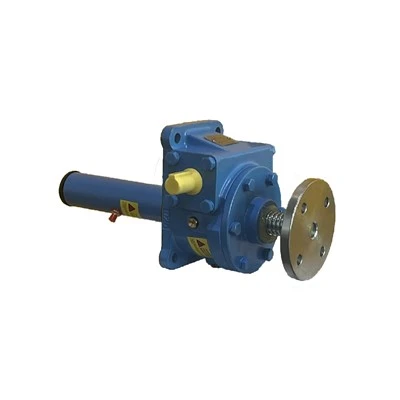
Planetary reducers deliver precise transmission performance. Any abnormal phenomenon signals potential faults. Unaddressed anomalies will accelerate component abrasion, damage transmission structures and even cause unplanned shutdown or equipment scrapping. Operators shall keep real‑time watch over six categories of anomalies including abnormal noise, vibration, temperature rise, sealing failure, transmission deviation and load variation, identify root causes accurately and conduct timely repair. First comes abnormal noise, the most intuitive fault signal. Normally running reducers produce even, low‑pitched sound without extra noise. Sharp metallic friction noise generally results from insufficient or deteriorated lubricant which triggers dry friction on gears and bearings, or burrs and abrasion on component surfaces. Periodic knocking sound mostly arises from broken gear teeth, offset planet gears or improper meshing clearance. Dull roaring noise is usually caused by overload or internal impurity jamming. Different noise features correspond to different fault types.
Second is abnormal vibration. Normal equipment operates with minimal and even vibration amplitude. Violent shaking, irregular jitter or local tremor mainly originates from loose fixing bolts, uneven installation base or excessive coaxiality deviation between input and output ends, which leads to uneven stress distribution in transmission systems. Uneven gear wear, excessive bearing clearance, deformed planet carriers and loose components can also trigger abnormal vibration. Persistent vibration aggravates transmission misalignment and component fatigue damage and expands fault scope. Shut down the equipment for calibration, bolt tightening and worn‑part replacement in time.
Temperature anomaly is a frequently‑ignored hidden hazard. The normal operating temperature range for planetary reducers is ‑20℃ to 80℃. Rapid temperature rise and over‑heated housing are mostly attributed to lubrication system failures, including improper lubricant filling volume, deteriorated oil with scale formation or mismatched oil grade, which bring about poor internal heat dissipation and increased friction resistance. Long‑term overload, frequent start‑stop, gear meshing jamming and dust‑blocked heat‑dissipation holes also cause excessive temperature. Sustained high temperature accelerates lubricant aging and gives rise to rapid wear of gears and bearings, even tooth burning and shaft seizure.
Sealing and leakage anomalies should also be noted. Qualified equipment shall have zero oil seepage, leakage or water ingress. Oil seepage or leakage at shaft ends, end covers and joints suggests aging, cracking or mis‑installed oil seals and gaskets, or blocked ventilation holes that raise internal pressure and break sealing components. Milky and emulsified oil mixed with dust proves intrusion of water vapor and foreign particles, which will result in gear rust, transmission jamming and precision degradation. Transmission deviation represents another key concern. Qualified reducers maintain steady rotational speed and uniform power output. Fluctuating rotating speed, power attenuation, loaded jamming, intermittent shutdown and transmission slipping are often caused by heavily worn core gears, damaged bearings, offset planet carriers or overload operation.
Besides, pay attention to load variation and peculiar smell. A burnt odor from seals or carbonized lubricant implies severe over‑temperature burning, which requires immediate power‑off and overhaul. Follow the principle of early detection, timely shutdown and prompt repair for all anomalies. Never keep running faulty units, or minor defects will develop into catastrophic equipment damage, so as to ensure safe, stable and high‑precision operation of planetary reducers.